China Top Diodes Incorporated MOSFET Replacement Suppliers?

Time:2026-10-10 Author:Isabella
0%

Finding a reliable Diodes Incorporated Mosfet Replacement supplier in China requires more than comparing prices. Engineers must examine electrical ratings, package dimensions, switching behavior, and long-term availability. A replacement may fit the circuit physically, yet fail under heat or load.

This guide explores China-based suppliers that support MOSFET sourcing, sampling, and technical verification. It focuses on practical evidence, including datasheets, traceable test reports, factory experience, and customer feedback. Reliable suppliers should explain RDS(on), gate charge, drain-source voltage, current ratings, and thermal limits clearly. They should also provide samples before confirming large orders. Small details matter.

Real-world testing remains essential. A substitute device should be checked on the actual PCB, not only in a spreadsheet. Engineers may compare switching waveforms, temperature rise, standby leakage, and performance during repeated load cycles. Packaging labels and date codes also deserve careful inspection. No supplier list is perfect. Conditions change.

Some manufacturers offer strong production capacity but limited application support. Others respond quickly but provide incomplete documentation. That difference can affect development schedules and product reliability. Buyers should ask about quality systems, incoming inspection, lot control, warranty terms, and replacement procedures. Independent laboratory testing may be appropriate for critical designs.

This overview is intended to support a careful supplier shortlist, not replace engineering judgment. The best Diodes Incorporated Mosfet Replacement partner is the one that combines verified performance, transparent communication, stable supply, and realistic technical support. Cost matters. Reliability matters more.
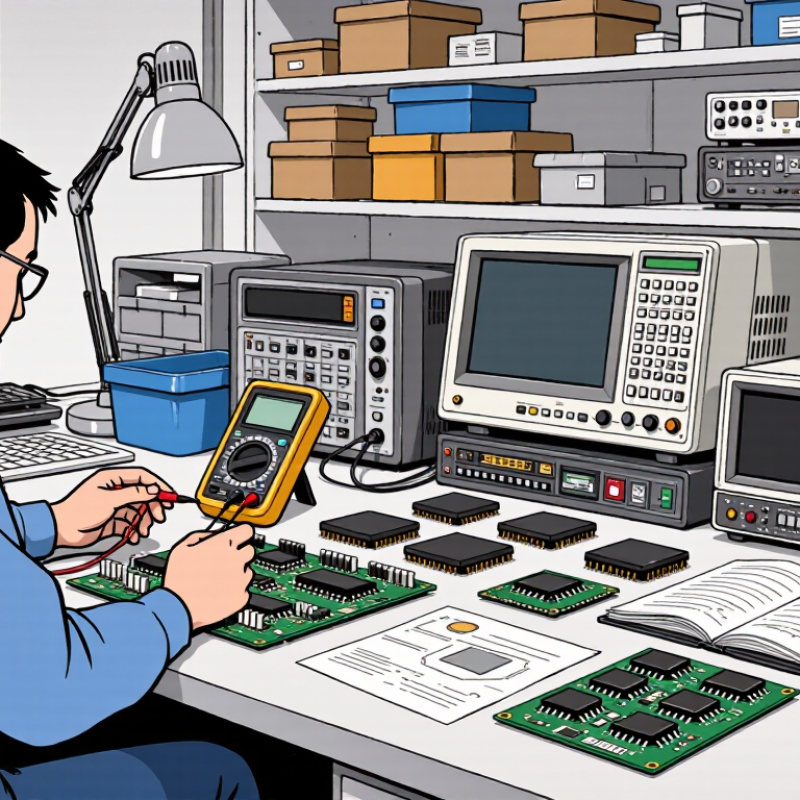
China Top Diodes Incorporated MOSFET Replacement Suppliers?

What Are Diodes Incorporated MOSFETs and Their Replacement Requirements?

MOSFETs are voltage-controlled power switches used in converters, motor drives, chargers, and protection circuits. A suitable replacement must match more than the drain-to-source voltage and current rating. Engineers should compare RDS(on), gate threshold voltage, total gate charge, switching speed, body-diode behavior, and package structure. Thermal resistance also matters because a cooler-looking specification may still produce excessive heat under real load.

Practical evaluation starts with the original datasheet, circuit conditions, and board layout. Check the maximum voltage with a safety margin, then calculate conduction and switching losses. Confirm the pin configuration carefully. A similar package can hide a different pin order. During bench testing, measure temperature, waveform overshoot, and gate-drive stability. One imperfect assumption can cause failure. Even experienced designers sometimes overlook parasitic inductance.

Tips: Request traceable datasheets, production samples, and inspection records from replacement suppliers. Compare at least two samples from different lots. Test the device at startup, steady load, and abnormal but controlled conditions. Ask whether the supplier can provide parameter consistency, packaging details, and technical support. A low unit price is not useful if the MOSFET varies widely between batches. When selecting China-based suppliers, review their quality systems, electrical test coverage, and response time. Do not rely on cross-reference tables alone; they are useful starting points, not final approval.

How to Identify Compatible MOSFET Specifications and Performance Criteria

Selecting a replacement MOSFET requires more than matching its package and voltage rating. A reliable supplier should provide complete datasheets, traceable test records, and stable production information. I compare drain-source voltage, continuous drain current, and pulsed current under the same temperature conditions. Ratings can look impressive on paper.

The gate threshold voltage is not the recommended drive voltage. Check the specified gate-to-source voltage, total gate charge, and on-resistance at the actual driver level. For switching circuits, compare turn-on and turn-off times, input capacitance, reverse-recovery behavior, and switching losses. A device with lower resistance may still perform worse if its gate charge is much higher. Watch the heat.

Package details also need careful inspection. Confirm pin configuration, mounting dimensions, exposed-pad design, and thermal resistance. Then review safe operating area, avalanche capability, body-diode performance, and short-circuit limits. In a practical test, I would measure case temperature, waveform ringing, and drain current using the original board. One overlooked parasitic inductance can change the result.

Supplier evaluation should include sample consistency, date-code control, failure analysis support, and production inspection methods. Request samples from more than one lot. Test them under cold start, full load, and repeated thermal cycling. I have seen a substitute pass a bench test but fail after several hours of heat. That mistake changed my process: specifications start the review, but measured behavior decides compatibility.

Where to Find Reliable MOSFET Replacement Suppliers in China

China offers a broad pool of MOSFET replacement suppliers, but availability alone does not prove reliability. WSTS forecasts global semiconductor sales to reach about 697 billion dollars in 2025. That growth increases sourcing opportunities, yet it also raises the risk of inconsistent parts. Buyers should verify wafer origin, production date, package markings, and traceability records before placing volume orders.

Practical evaluation starts with a small sample. Measure drain-source resistance, gate threshold voltage, leakage current, and thermal performance under controlled conditions. Request datasheets, qualification reports, and lot-specific inspection records. A capable Chinese supplier should explain its testing equipment and provide clear replacement cross-reference tables. Ask difficult questions.

I have found that packaging details often reveal more than a polished website. Check lead plating, molding quality, label consistency, and moisture-protection packaging. The IPC-1752A material declaration framework can support documentation checks, while IEC-based qualification results help assess electrical reliability. One weakness remains: cross-reference data may overlook switching frequency or thermal resistance. Engineers should retest the device in the actual circuit, especially in chargers, industrial controls, and automotive-related applications. Supplier audits, video inspections, and independent laboratory testing add useful evidence before signing a long-term agreement.

How to Evaluate Chinese Suppliers for Quality, Pricing, and Support

Choosing Chinese MOSFET replacement suppliers requires more than comparing unit prices. WSTS reported global semiconductor sales reached about $630.5 billion in 2024. SEMI’s 2024 outlook also projected global manufacturing capacity growth of roughly 6%. This expansion creates options, but consistency still varies.

In sourcing work, I start with traceability. Ask for wafer-fab locations, assembly sites, lot codes, date codes, and change-notification procedures. Request electrical curves at the actual gate voltage, temperature, and switching frequency. A matching voltage rating proves little. Check RDS(on), gate charge, avalanche rating, thermal resistance, and body-diode performance. Many quotations look identical until the device heats up.

Quality evidence should include ISO 9001 and IATF 16949 for automotive applications. Request JEDEC-based qualification data, including high-temperature gate-bias and temperature-cycle results. Test samples from at least two production lots.

Pricing must include tooling, minimum order quantities, freight, inspection, and long-term availability. A cheap quote can become expensive after redesign. Reports offer averages, not guarantees. I have seen good documents fail to predict real production variation.

Tips: Use one scorecard for three or more suppliers. Weight quality at 40%, total cost at 30%, delivery at 15%, and support at 15%. Require response-time commitments, failure-analysis procedures, and a named technical contact. If possible, inspect incoming quality, marking, molding, and final testing. Keep a golden sample. Recheck it after every process change.

What Procurement Steps Ensure a Successful MOSFET Replacement?

Replacing a MOSFET requires more than matching voltage and current ratings. Procurement teams should compare drain-source voltage, continuous drain current, RDS(on), gate charge, package type, and thermal resistance. Check the original circuit under real load conditions. A substitute may pass basic tests yet overheat during switching.

Request datasheets, qualification records, production location, and lot traceability from each supplier. Ask for recent samples from normal production, not specially selected units. Test them on the actual board, measuring temperature rise, switching loss, gate behavior, and electromagnetic noise. Confirm package dimensions and pin configuration with a physical sample. One overlooked pin difference can damage an entire batch. I have seen teams trust a similar part number too quickly; that shortcut deserved more review.

Tips: Create a comparison sheet with electrical, mechanical, supply, and quality fields. Require written confirmation for every critical parameter. Purchase a small pilot lot before approving volume supply. Inspect markings, packaging, and date codes when samples arrive. Keep test results with the supplier quotation. Pricing matters, but unstable lead times can cost more than a higher unit price. Review second-source options early. However, avoid approving too many alternatives without testing each one. Some procurement plans look complete on paper, but real boards often reveal unexpected heat or noise.

China Top MOSFET Replacement Suppliers? — What Procurement Steps Ensure a Successful MOSFET Replacement?

Procurement Step Technical Dimension Recommended Requirement Acceptance Criteria Required Evidence Typical Timing
1. Define the replacement scope Application and circuit position Record topology, switching frequency, load type, gate-drive voltage, ambient temperature, and duty cycle. A complete electrical and mechanical specification is approved before supplier quotations are compared. Schematic, bill of materials, operating profile, and approved specification sheet. 1–3 working days
2. Screen the electrical rating Drain-source voltage and continuous current Select a voltage rating above the maximum measured drain-source voltage, including switching overshoot. Use a design margin commonly starting at 20–30%, subject to transient analysis. No avalanche or breakdown occurs during worst-case voltage testing; continuous and pulsed current ratings cover the validated thermal operating point. Datasheet, oscilloscope waveforms, transient report, and derating calculation. 2–5 working days
3. Match conduction performance RDS(on) and test conditions Compare on-resistance at the actual gate-drive voltage and junction temperature; do not compare values measured under different conditions. Calculated conduction loss and measured temperature rise remain within the original design limit. Electrical comparison table, thermal calculation, and sample test report. 3–7 working days
4. Check switching compatibility Gate charge, capacitance, and switching speed Compare total gate charge, Miller charge, input capacitance, output capacitance, turn-on/off delay, and reverse-recovery interaction where applicable. Switching loss, ringing, electromagnetic emissions, and device temperature remain within validated limits. Double-pulse or application-level switching test data and gate-waveform records. 5–10 working days
5. Verify gate-drive requirements Threshold voltage and gate-source limits Confirm that the existing driver fully enhances the replacement at its available gate voltage. Respect the absolute maximum gate-source voltage, commonly ±20 V for many silicon MOSFETs but not universal. Stable gate waveform, adequate turn-on margin, and no gate overstress under transient conditions. Gate-driver schematic, device datasheet, and measured VGS waveform. 2–5 working days
6. Confirm package and pin compatibility Package outline, footprint, pin assignment, and creepage Verify package dimensions, lead spacing, tab connection, pinout, mounting method, insulation requirements, and PCB land pattern. The device fits without mechanical modification and maintains required electrical clearances. Mechanical drawing, pinout diagram, PCB review, and first-article inspection record. 2–5 working days
7. Evaluate thermal performance Junction temperature and thermal resistance Calculate conduction and switching losses using the actual operating conditions. Include PCB copper area, heatsink, interface material, and airflow. Estimated junction temperature stays below the specified maximum with the agreed design margin; many silicon devices specify 150°C, but the selected datasheet governs. Thermal model, infrared or thermocouple measurements, and worst-case load test. 5–10 working days
8. Qualify supplier capability Quality system, traceability, and change control Require documented lot traceability, process-change notification, counterfeit-prevention controls, and a quality management system appropriate to the application. Supplier passes document review and agrees to written notification before material, process, factory, or specification changes. Quality certificates, audit questionnaire, change-notification policy, and traceability sample. 1–3 weeks
9. Request samples and test lots Sample representativeness Obtain samples from a defined production lot and, when possible, test multiple lots rather than engineering-only samples. Electrical, mechanical, and application tests pass with no unexplained lot-to-lot variation. Lot number, date code, certificate of conformity, incoming inspection results, and test summary. 1–4 weeks
10. Run reliability validation Environmental and endurance performance Use application-relevant temperature cycling, high-temperature operating life, power cycling, humidity, vibration, or surge tests as required by the product risk assessment. No electrical drift, package damage, leakage failure, or functional degradation beyond approved limits. Validation plan, pre- and post-test measurements, failure analysis procedure, and signed approval report. 2–8 weeks
11. Compare commercial terms Total landed cost and supply continuity Compare unit price, minimum order quantity, lead time, tooling or setup charges, payment terms, logistics, warranty, and authorized distribution route. The approved source meets cost and delivery targets without weakening technical or quality controls. Formal quotation, capacity statement, lead-time commitment, warranty terms, and supply-risk assessment. 3–7 working days
12. Approve and monitor production Production release and ongoing control Release the replacement only after engineering, quality, and procurement approval. Define incoming inspection, periodic requalification, and supplier performance metrics. Production lots remain within agreed electrical, mechanical, delivery, and defect-rate limits. Approved vendor list entry, engineering change order, control plan, inspection records, and quarterly supplier review. Ongoing
Engineering note: A MOSFET is not considered a drop-in replacement solely because its voltage, current, and package markings appear similar. Final approval should be based on datasheet-condition matching, worst-case electrical testing, thermal validation, mechanical inspection, and supplier quality evidence.

FAQS

What should buyers verify before choosing a replacement supplier?

Request wafer-fab locations, assembly sites, lot codes, and date codes. Confirm how the supplier reports process changes. Traceability matters more than a polished quotation.

Which electrical parameters should be compared?

Compare voltage, current, RDS(on), gate charge, thermal resistance, and avalanche capability. Check body-diode performance too. Test values at the real gate voltage and temperature.

Why can a matching voltage rating be misleading?

Voltage matching proves very little. A substitute may overheat during switching. Measure temperature rise, switching loss, gate behavior, and electrical noise.

What quality evidence should suppliers provide?

Request quality-management certifications and qualification records. Ask for high-temperature gate-bias and temperature-cycle results. Test samples from at least two normal production lots.

How can procurement teams test a replacement safely?

Test the device on the actual circuit and board. Use the expected load, switching frequency, and operating temperature. A small pilot lot is wise. Paper approval can still fail.

What mechanical details require physical inspection?

Confirm package dimensions and pin configuration with a real sample. Inspect markings, molding, packaging, and date codes. One unnoticed pin difference can damage a full batch.

How should total pricing be evaluated?

Include tooling, minimum orders, freight, inspection, and long-term availability. Also estimate redesign costs from unstable performance. The cheapest unit price may not be cheapest overall.

How can suppliers be compared fairly?

Use one scorecard for at least three suppliers. Weight quality at 40%, total cost at 30%, delivery at 15%, and support at 15%. Keep the scoring visible. The weighting may need review.

What support commitments should be written into the agreement?

Require response-time commitments, failure-analysis procedures, and a named technical contact. Confirm support during production changes. Keep quotation records with test results.

Should every possible alternative be approved?

No. Test each alternative before approval. Keep a qualified second source available. Too many untested options create confusion and hidden risk.

Conclusion

Finding a reliable Diodes Incorporated Mosfet Replacement supplier in China requires more than comparing prices. Buyers should first identify the original MOSFET’s essential specifications, including drain-source voltage, continuous drain current, on-resistance, gate threshold, switching speed, package type, thermal performance, and pin configuration. These parameters must match the application’s electrical, mechanical, and environmental requirements to ensure safe and stable operation.

When evaluating Chinese suppliers, review their manufacturing capabilities, quality-control procedures, testing equipment, certifications, production consistency, and experience with equivalent components. Request datasheets, samples, test reports, and traceability information before placing a larger order. A successful procurement process should also define sample approval, packaging, delivery schedules, warranty terms, technical support, and communication procedures. By combining careful specification verification with supplier assessment and controlled testing, buyers can reduce replacement risks, manage costs, and establish a dependable long-term sourcing channel.


Isabella

Isabella

Isabella is a dedicated marketing professional with a sharp focus on driving brand growth and engagement through strategic content creation. With an extensive background in digital marketing, she combines her passion for storytelling with her keen understanding of industry trends to deliver......