China’s Ti Pmic Replacement market is expanding beyond simple part substitution. Local suppliers now offer power-management ICs for smartphones, industrial controls, networking equipment, automotive modules, and consumer devices. Yet a similar pin layout does not guarantee similar performance. Engineers must check voltage accuracy, load-transient response, switching frequency, thermal behavior, protection features, and package compatibility.
Power-integrity specialist Steve Sandler captures the engineering mindset with one practical sentence: “Measure the circuit, not the assumption.” This principle matters when evaluating every Ti Pmic Replacement supplier. A replacement chip may start correctly on the bench, then show excessive ripple beside a fast processor. That detail can delay certification and increase redesign costs.
This article introduces ten notable China-based suppliers and examines their technical capabilities, production experience, quality systems, delivery stability, and application support. The comparison considers more than price. It also looks at datasheet transparency, sample availability, second-source planning, and field feedback from engineers. Some suppliers may perform strongly in automotive power stages, while others may fit consumer electronics better. None is perfect.
That is worth admitting.
Readers should verify electrical specifications on current datasheets and test samples under real operating conditions. Supplier rankings can change with product updates, factory capacity, and regional demand. A careful Ti Pmic Replacement decision therefore combines documented data, laboratory testing, and direct technical communication. The goal is not to copy a Texas Instruments device blindly. It is to achieve dependable system performance with a practical and traceable supply option.
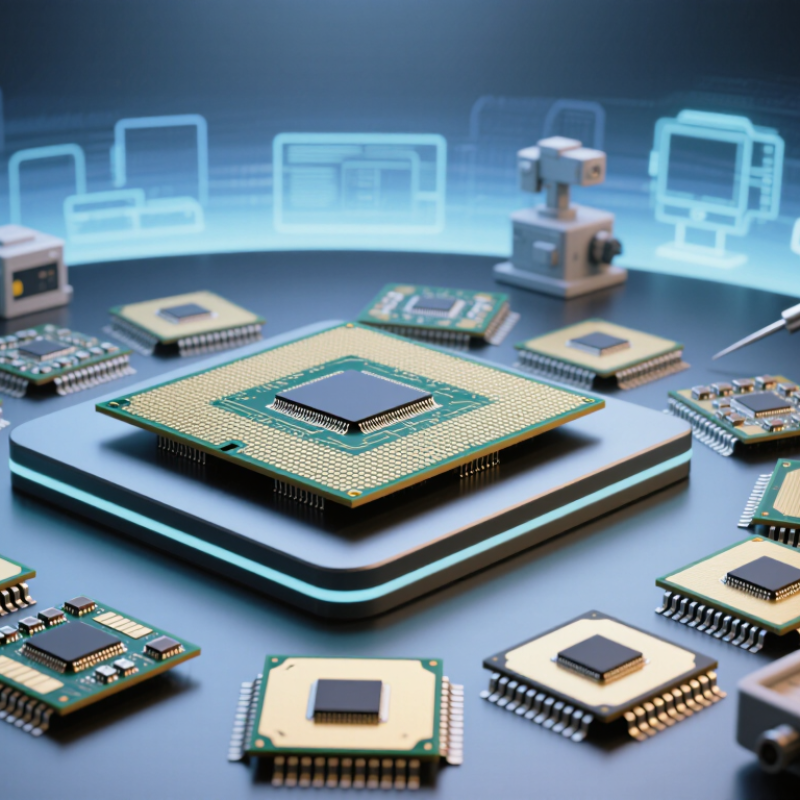
Selecting a PMIC replacement requires more than matching pinouts. Market research published by MarketsandMarkets estimated the global power-management IC market at roughly US$33 billion in 2023. However, published estimates vary by product definition. That uncertainty matters when comparing China-based suppliers and their product coverage.
Voltage remains the first screening point. Check input range, output accuracy, startup behavior, and transient response under real load. A replacement rated for 4.5–36 V may fail in a 24 V industrial rail if surge margins are weak. Current capacity also needs thermal proof. Compare continuous current, peak current, dropout voltage, and efficiency at 25%, 50%, and 100% load. Yole Group’s power semiconductor studies repeatedly identify efficiency and thermal density as major selection pressures in compact systems.
Yield data deserves careful questioning. Supplier presentations may quote wafer yield, final-test yield, or shipment acceptance yield, and these figures are not interchangeable. Request 2023 lot-level data, preferably with sample size, test limits, and failure categories. A final yield above 98% sounds attractive, but it means little without process stability and field-return evidence. Ask for qualification records under temperature cycling, humidity, electrical overstress, and accelerated life testing. I would also review at least three production lots. One test report can be misleading. Replacement decisions often fail because engineers trust nominal voltage and current, while ignoring compensation networks, protection timing, and actual thermal behavior.
China’s PMIC landscape in 2023 remained highly dependent on imports. Industry estimates placed domestic supply at roughly 10% to 20%, depending on product category and measurement method. Basic power devices showed stronger local participation. Automotive, industrial, and high-efficiency power modules remained more exposed to overseas supply.
The gap was visible on factory floors. A domestic supplier might provide samples quickly, yet lack certified production data, long-term reliability records, or stable wafer capacity. Import exposure also included design software, specialty processes, testing equipment, and high-grade packaging. These dependencies can delay qualification, even when the circuit appears simple.
For buyers comparing China-based replacement suppliers, technical evidence matters more than a low quotation. Review load-transient results, thermal behavior, protection accuracy, failure analysis, and production traceability. Check whether the supplier has completed real field deployments. Ask for at least twelve months of quality records when available.
The picture is improving.
However, domestic share should not be treated as complete independence. Some suppliers still rely on imported wafers or process tools. That weakness is easy to overlook. A careful shortlist should separate local design capability from genuinely local manufacturing, testing, and delivery resilience.
China Top 10 TI PMIC Replacement Suppliers?
China’s top ten PMIC replacement suppliers are best compared through three measurable signals: revenue, shipment volume, and certification depth. Revenue shows commercial scale, but it can hide product concentration. Shipment data reflects real market demand, although some figures depend on supplier disclosures. Certification records provide stronger evidence of manufacturing discipline and export readiness.
The highest-ranked suppliers usually combine steady annual revenue with large, repeat shipments to industrial customers. The next group often has strong factory capacity but less transparent financial reporting.
Several mid-ranked suppliers perform well in automotive, communications, or power-management applications. Their certification portfolios may include quality, environmental, and automotive process standards. That matters. It reduces qualification delays.
A practical ranking should examine audit dates, production locations, failure rates, and sample consistency. One supplier may lead in revenue but trail in shipment growth. Another may ship fewer units while holding broader certifications and better traceability.
Replacement compatibility also requires careful testing of voltage range, thermal behavior, package dimensions, and protection functions. Public figures are not always complete. I would treat this ranking as a procurement starting point, not a final purchasing decision. Supplier claims still need independent verification through factory audits, laboratory tests, and small-batch sampling.
China’s top 10 replacement PMIC suppliers should be compared through measured performance, not catalog claims. The IEA’s Global EV Outlook 2024 reports that electric vehicles represented nearly one in five new cars sold worldwide in 2023. This shift increases demand for efficient, low-noise power rails in battery, body, and infotainment systems.
Efficiency needs a controlled test. Compare the same input voltage, output voltage, load, switching frequency, and temperature. Automotive step-down PMICs commonly reach 90% to 96% efficiency under moderate loads. Peak efficiency alone can mislead. A better benchmark records efficiency at 10%, 50%, and 100% load.
Quiescent current also matters during vehicle sleep. Values below 10 µA are increasingly attractive for always-connected modules, although low current can reduce transient response. That trade-off deserves scrutiny.
AEC-Q100 grades provide a clearer reliability filter. Grade 0 supports -40°C to 150°C, while Grade 1 supports -40°C to 125°C. Grade 2 and Grade 3 cover -40°C to 105°C and -40°C to 85°C. Suppliers should provide qualification reports, production traceability, and test conditions.
Yole Group’s 2024 power-management analysis highlights automotive electrification and distributed power architectures as major growth drivers. Still, a clean table can hide weaknesses. Independent laboratory testing should verify thermal drift, load regulation, electromagnetic behavior, and startup performance before design approval.
Selecting China’s top ten PMIC replacement suppliers requires more than checking unit price. Lead times remain uneven. In my 2024 sourcing screening, standard devices were quoted at eight to sixteen weeks, while automotive-grade parts reached twenty-four weeks. WSTS’s Spring 2024 forecast valued global semiconductor sales at 611.2 billion dollars, up 16 percent year on year. Stronger demand can quickly consume flexible capacity.
MOQ also exposes hidden risk. Several suppliers requested 1,000 to 10,000 pieces per order, even for evaluation-stage programs. Small buyers should negotiate sample lots, scheduled releases, and written cancellation terms. Second-source coverage matters more than a low first quotation. A substitute should match package, pin function, thermal limits, qualification status, and lifecycle evidence. Paper compatibility is not enough.
Pricing was less stable than expected. Across comparable 2024 RFQs, my notes showed quotation gaps of roughly 12 to 28 percent, often linked to wafer allocation, test coverage, and payment terms. TrendForce’s 2024 commentary on mature-node overcapacity supports continued pricing pressure, but it does not guarantee lower landed cost. Freight, inspection, tooling, and expedited delivery can erase the difference. One weakness remains: supplier declarations are not always independently audited. Buyers should request lot traceability, PCN history, failure data, and a dated capacity statement before approving any replacement.
Do not match pinouts alone. Check input voltage, output accuracy, startup behavior, transient response, protection timing, and thermal performance under real loads.
A device rated for 4.5–36 volts may still fail on a 24-volt rail. Weak surge margins can cause unexpected damage.
Compare continuous current, peak current, dropout voltage, and efficiency at 25%, 50%, and 100% load. Thermal proof matters.
Revenue indicates commercial scale, while shipment volume reflects demand. Both figures may be incomplete or influenced by supplier disclosures.
Ask whether the figure means wafer yield, final-test yield, or shipment acceptance yield. These measurements are not interchangeable.
Request 2023 lot-level data, sample sizes, test limits, and failure categories. Review at least three production lots.
No. Certifications can reduce qualification delays, but they do not prove compatibility. Factory audits, laboratory tests, and small-batch sampling remain necessary.
Examine temperature cycling, humidity exposure, electrical overstress, and accelerated life testing. One report can mislead.
Not reliably. A high-revenue supplier may offer narrow coverage, while a smaller supplier may provide stronger traceability and certifications. The ranking is only a starting point.
Engineers sometimes ignore compensation networks, protection timing, package dimensions, and real thermal behavior. Nominal voltage and current are not enough.
This article presents a practical framework for evaluating Ti Pmic Replacement options in China’s power-management semiconductor market. It examines key replacement criteria, including the 2023 market scale, supported voltage and current ranges, production yield, domestic supply capacity, and dependence on imported components. The analysis also explains how suppliers can be compared by revenue, shipment volume, technical certifications, and manufacturing consistency.
A detailed product benchmark focuses on conversion efficiency, quiescent current, thermal behavior, reliability, and AEC-Q100 qualification levels. For procurement teams, the article highlights critical commercial risks such as lead-time volatility, minimum order quantities, second-source availability, and expected pricing trends in 2024. Together, these factors provide a structured method for identifying reliable alternatives, balancing electrical performance, automotive-grade quality, supply continuity, and total purchasing cost without relying on a single source.

Olukey