 Olukey
The Strategic Crux of MOSFET Selection in AC-DC Power Systems
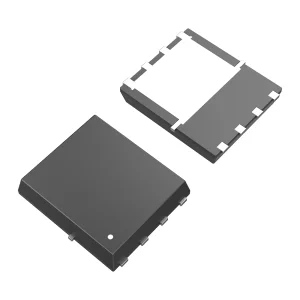
Modern electrical architecture demands an aggressive balance between energy efficiency, thermal stability, and footprint optimization. AC-DC conversion stages—ranging from simple flyback topologies to complex interleaved LLC resonant converters—rely heavily on the transient response and structural integrity of the switching silicon. High-power density demands dictate that semiconductor components exhibit low drain-source on-resistance ($R_{DS(on)}$), minimal total gate charge ($Q_g$), and robust avalanche capabilities ($E_{as}$).
As power system designers move away from bulkier planar structures toward superjunction architectures and high-density trench technologies, the integration of custom-engineered MOSFET parameters becomes indispensable. When standard, off-the-shelf options introduce engineering compromises (such as excessive parasitic capacitance or thermal throttling), custom semiconductor options become the direct path to achieving targeted efficiency profiles like 80 PLUS Titanium and Energy Star requirements.