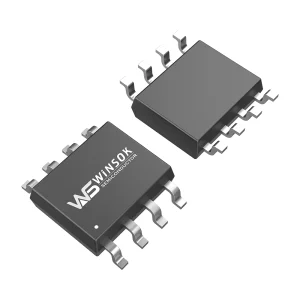
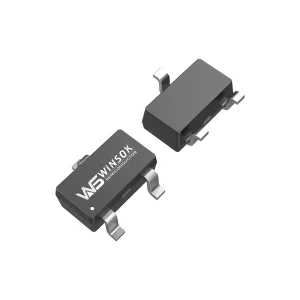
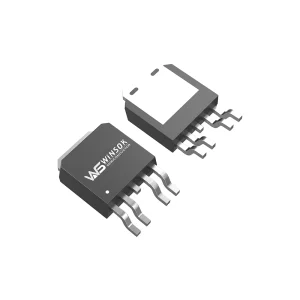
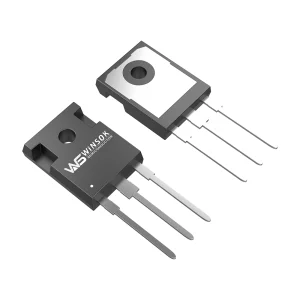
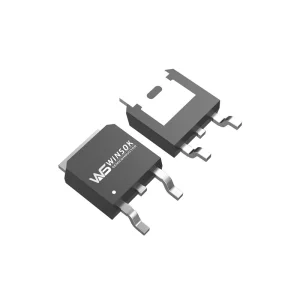
Discover our top-performing semiconductor components tailored for high-efficiency switching, thermal resilience, and drop-in cross-reference equivalence.
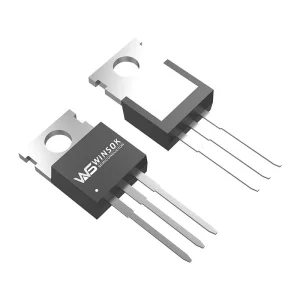
The global transition toward renewable energy has propelled solar photovoltaic (PV) systems from niche alternative solutions to mainstream utility infrastructure. Central to this paradigm shift is the solar inverter, which demands unparalleled power conversion efficiency, thermal reliability, and cost-effectiveness. Inside these inverters, the choice of Power MOSFETs plays a vital role. Inverters rely on fast-switching, low-loss MOSFETs to convert direct current (DC) from solar panels into clean alternating current (AC) for local consumption or grid distribution.
With solar installations reaching gigawatt capacities globally, utility and commercial developers face massive supply chain pressures. High-quality MOSFET cross-referencing has transitioned from an engineering convenience to a core business strategy. Having a dependable supplier that can offer free samples and exact cross-references for major component manufacturers reduces design cycle risks and mitigates global component shortages.

When dealing with solar power conversion topologies, dropping in a substitute MOSFET requires meticulous assessment of dynamic and static characteristics. It is not just about match-to-match voltage ratings.
Matching the maximum Drain-to-Source Voltage ($V_{DSS}$) and ensuring the Gate Threshold Voltage ($V_{GS(th)}$) aligns with drive circuitry voltages are basic prerequisites. Minimizing the On-State Resistance ($R_{DS(on)}$) at nominal junction temperatures reduces conduction losses, which is vital for keeping system temperatures within operational limits.
Switching speeds depend directly on Total Gate Charge ($Q_g$), Gate-to-Drain Charge ($Q_{gd}$), and Input Capacitance ($C_{iss}$). When swapping out components in high-frequency applications like microinverter boost stages, choosing a replacement with an equal or lower $Q_g$ prevents gate driver overloading and limits switching losses.
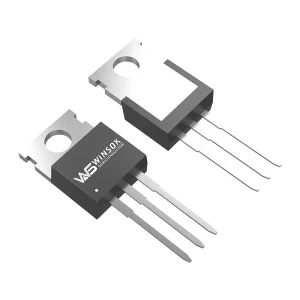
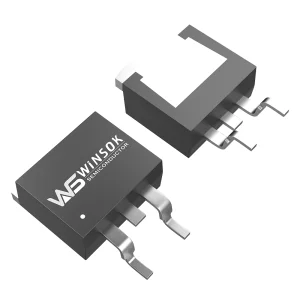
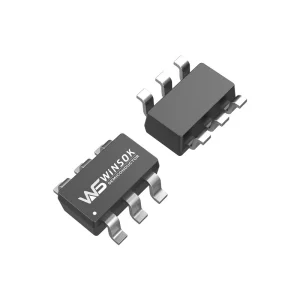
Solar inverters endure harsh operating conditions. Checking the Safe Operating Area (SOA) and ensuring the thermal resistance from junction to case ($R_{thJC}$) is optimized in surface-mount (e.g., DFN5X6, DFN3X3) or through-hole (TO-220, TO-247) configurations ensures long-term field reliability.
| Winsok Reference Part Number | Package Format | V_DS (V) | I_D (A) | Key Applications & Cross-Reference Capability |
|---|---|---|---|---|
| WSL60N65 | TO-247-3L | 650V | 60A | High-voltage PFC, solar inverter boost stages, industrial UPS systems. Alternative to ST, Infineon. |
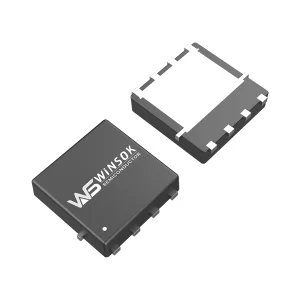
| WSD45P10DN56 | DFN5X6-8L | -100V | -30A | Reverse polarity protection in PV DC combiners, load switching systems. |
| WSR90N07 | TO-220-3L | 72V | 84A | DC-DC conversion, battery storage management interfaces, battery charge controllers. |
| WSD3072DN33 | DFN3X3-8L | 30V | 72A | Synchronous rectification stages, low-voltage battery management systems. |

HONGKONG Olukey INDUSTRY CO., LIMITED is an integrated electronics solution provider specializing in component procurement, microcontroller development, and high-reliability design services. Our business is structured around three core product lines: WINSOK MOSFETs, Cmsemicon MCUs, and custom PCBA circuit board solutions.
Operating primarily in the Asia-Pacific region, Olukey bridges the gap between original equipment manufacturers (OEMs) and high-quality semiconductor component supply. By offering free samples for R&D, cross-reference support, and localized technical guidance, we help design engineers bring products to market quickly and cost-effectively.
The power electronics industry is undergoing rapid shifts in logistics, manufacturing origins, and materials. Understanding these changes helps design engineers build resilient supply chains.
Geopolitical challenges and shipping bottlenecks have highlighted the risks of relying on single-source suppliers. Standardizing footprints using cross-referenceable alternatives prevents line stoppages during sudden material shortages.
Residential solar is moving toward decentralized microinverter designs. These configurations place small, highly efficient inverters on each panel, demanding compact surface-mount packages (like DFN3X3 and DFN5X6) with low thermal resistance.
Utility-scale projects require overall conversion efficiencies of 98% or higher. Selecting low-gate-charge, fast-recovery MOSFETs for synchronous rectification directly influences these efficiency metrics.
As the solar energy market expands, power switching components must evolve to support higher switching frequencies, increased power densities, and harsher environments. Modern topologies like three-level Neutral Point Clamped (NPC) and Active NPC architectures require optimized, low-parasitic packaging to operate efficiently.
Our engineering roadmap focuses on reducing on-resistance per unit area ($R_{DS(on)} \times A$) and minimizing gate charge. This allows for higher switching frequencies, which in turn reduces the size of passive components like inductors and capacitors. The result is smaller, lighter, and more cost-effective solar inverter designs.
We are also adapting packaging designs for modern surface-mount lines. Multi-channel DFN variants and advanced copper-clip packages improve thermal dissipation ($R_{thJC}$) to support higher currents without requiring large heat sinks.

Answers to common technical and logistical questions regarding solar inverter MOSFET selection, cross-referencing, and sample procurement.
Explore more of our power management semiconductor lineup, including microcontrollers, high-density packaging variants, and custom wireless power components.
 Olukey