The global home appliance landscape is undergoing a critical transition driven by environmental mandates, regulatory pressures, and consumers demanding quieter, smarter, and more energy-efficient washing machines. Modern washing machines no longer rely on simple brushed motors directly driven by AC mains. Instead, the industry has standardized on Brushless DC (BLDC) motors and Permanent Magnet Synchronous Motors (PMSM) powered by intelligent variable-frequency inverters.
This massive shift places power MOSFETs at the core of washing machine hardware design. The efficiency of a washing machine's main controller board, dynamic water pump, and drum drive motor relies heavily on the performance characteristics of MOSFETs. To meet strict international energy standards such as the EU's ErP Directive and Energy Star in North America, designers require MOSFETs with ultra-low Drain-Source On-Resistance ($R_{DS(on)}$), high thermal dissipation capability, and low electromagnetic interference (EMI) profiles.
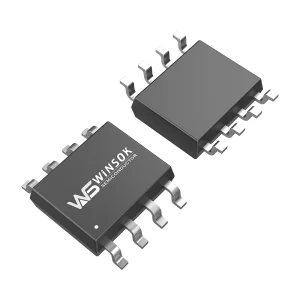
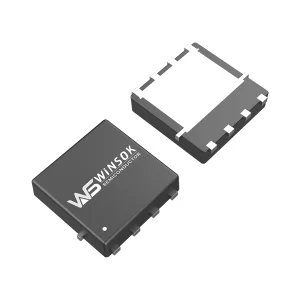
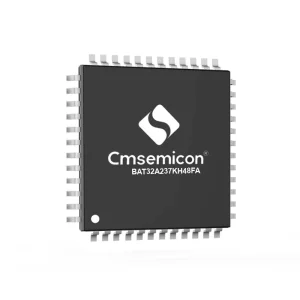
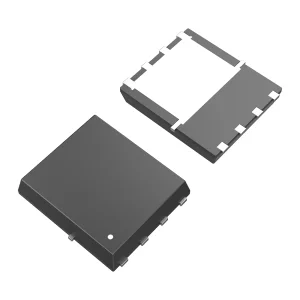
Additionally, the integration of IoT smart home features introduces complex microcontrollers (such as Cmsemicon MCUs) that control water levels, temperature sensors, and detergent dispensing pumps. Each of these sub-circuits requires specialized power switching MOSFETs. High-voltage protection, logic-level gate drives, and space-saving packages (DFN3x3-8, DFN5x6-8, SOP-8) are now key metrics for washing machine board layouts.
HONGKONG Olukey INDUSTRY CO., LIMITED has positioned itself as a global semiconductor solution provider. Focusing on the three core pillars of modern electronics—WINSOK MOSFETs, Cmsemicon MCUs, and customized PCBA solutions—we offer an integrated supply chain that reduces time-to-market for major appliance manufacturers.
Operating in the Asia-Pacific region, Olukey Industry leverages partnerships with key original semiconductor fabs. This allows us to serve high-growth markets like smart industry, automotive electronics, and IoT smart appliances, providing high-efficiency MOSFETs to replace legacy, expensive Western brands without compromising reliability.
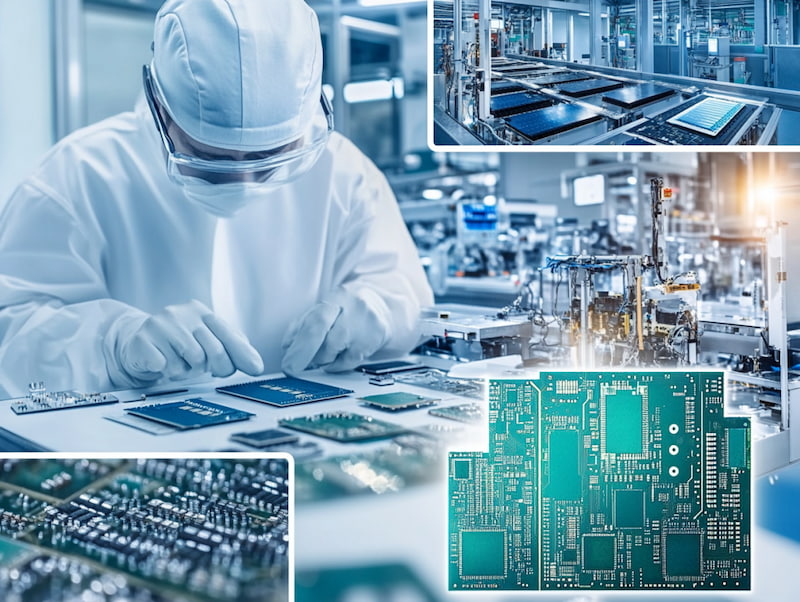
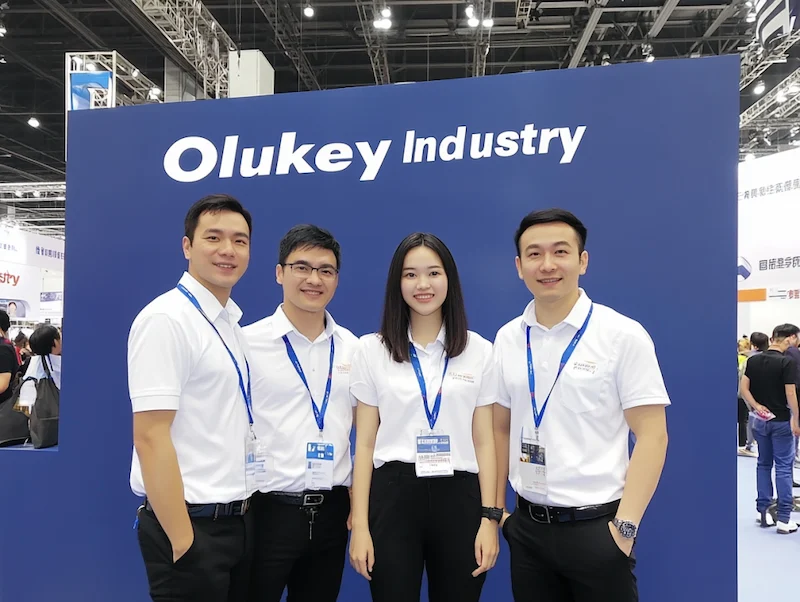
By partnering with Olukey Industry, procurement directors gain access to a complete design ecosystem. We don’t just supply discrete MOSFET components; we also design, debug, and deliver complex PCBA circuits containing optimized gate driver stages, microcontroller firmware, and robust thermal layouts.
Global purchasing departments face three major hurdles: supply chain instability, unpredictable component lead times, and rising semiconductor unit costs. When buying MOSFETs for washing machines, engineers and purchasing agents look for:
Direct pin-to-pin, electrical-parameter-equivalent drop-in replacements for Western brands, minimizing redesign costs.
Competitive pricing from direct Chinese distribution routes, helping consumer appliance brands maintain healthy profit margins.
Stable production pipelines that prevent production line stoppages due to semiconductor supply crunches.
Olukey Industry directly addresses these issues. As global distributors of WINSOK MOSFETs, we offer components that match or exceed the performance of brands like Nexperia, Infineon, and ON Semi. This ensures supply chain managers can secure high-quality alternative components with reliable delivery schedules.
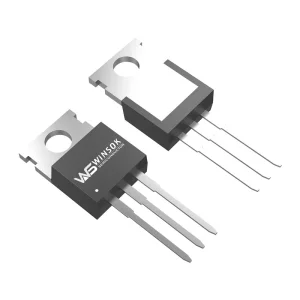
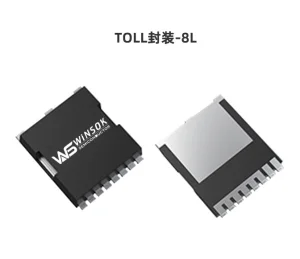
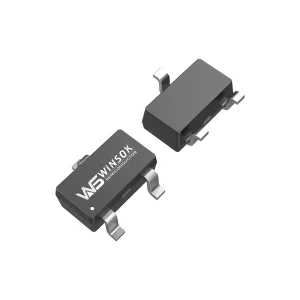
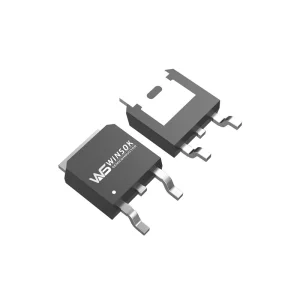
WINSOK MOSFETs offer a wide range of voltages from medium and low voltage (15V to 300V) up to high voltage (400V to 650V), available in over 600 models and 40 package options. Key packages used in appliance design include:
By utilizing advanced silicon designs like Split-Gate Trench (SGT) technology, WINSOK MOSFETs reduce gate charge ($Q_g$) and drain-to-source resistance ($R_{DS(on)}$). For washing machine inverter bridges, this yields dual benefits: lower dynamic switching losses during high-frequency motor control, and lower static conduction losses during long washing cycles.
Olukey Industry provides tailored component packages for the major subsystems within washing machines:
The main inverter board converts single-phase AC power into variable 3-phase AC voltage. Using six N-Channel MOSFETs (such as the WSD40120DN56 or WSD4076DN56) in a bridge configuration, the system drives the drum motor. These components require high pulse-current ratings ($I_{DM}$) to handle motor start-up surges, and low thermal resistance ($R_{thJC}$) to run without bulky heatsinks.
Active water drainage and dynamic filling systems use smaller synchronous motors or solenoid valves. Compact, high-efficiency dual MOSFETs (such as the WSP4608 N+P Channel pair) simplify these driver circuits by combining two switches into a single SOP-8 package, reducing component count and board space.
The standby power supply board converts AC mains down to low-voltage DC (5V, 3.3V) for the microcontroller, LEDs, and wireless modules. High-voltage WINSOK MOSFETs (500V - 650V) are utilized here to ensure stable operation during line voltage spikes.
Selecting the right MOSFET is only the first step. Engineering teams require local Field Application Engineer (FAE) support to debug PCB layouts, analyze thermal issues, and pass compliance testing. Olukey Industry offers global FAE assistance to speed up system integration:


The next generation of washing machine electronics will target higher levels of integration and intelligent operation. Key developments in our technical pipeline include:
Future system architectures will transition from discrete microcontrollers and standalone power stages toward Intelligent Power Modules (IPMs). By placing the motor drive code on low-power 32-bit MCUs (like the Cmsemicon BAT32A237) and co-packaging the drive stage with ultra-low $R_{DS(on)}$ WINSOK MOSFETs, manufacturers can design smaller drive boards that fit directly inside the motor casing.
As performance requirements increase, high-end commercial washing machines are adopting Gallium Nitride (GaN) and Silicon Carbide (SiC) switches. While silicon MOSFETs remain the standard for domestic washing machines due to their cost-performance ratio, Olukey is tracking next-gen developments to offer hybrid silicon-GaN solutions that further reduce switching losses and overall system size.
 Olukey