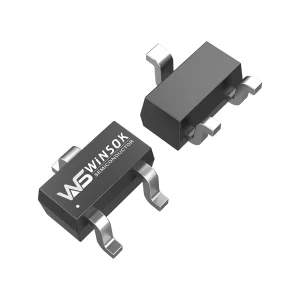
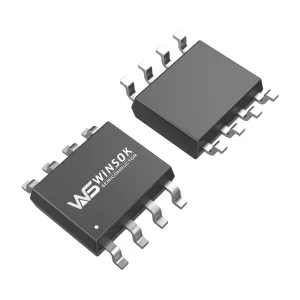
Explore our highly integrated, high-reliability N-Channel and P-Channel devices optimized for commutation, logic gates, and gate driver interfaces.
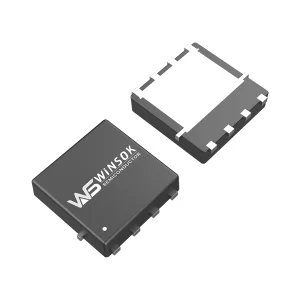
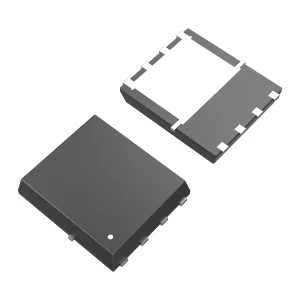
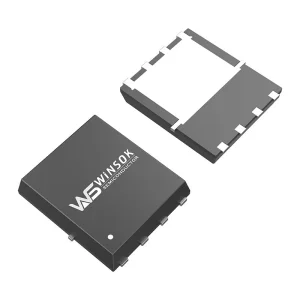
MOSFET Models Cataloged
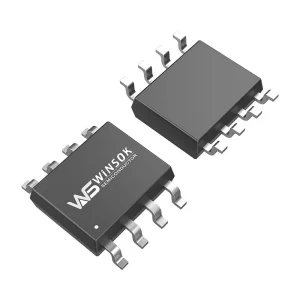
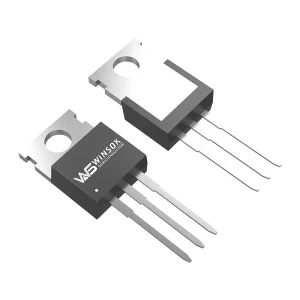
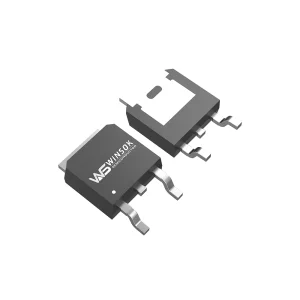
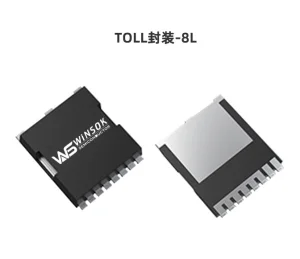
Global Standard Packages
Comprehensive Voltage Range
Quality Target Guarantee
Modern motor control systems demand unprecedented power density, minimal thermal footprint, and optimal high-frequency switching capabilities. Metal-Oxide-Semiconductor Field-Effect Transistors (MOSFETs) act as the bedrock of control units in Variable Frequency Drives (VFDs), Brushless DC (BLDC) motors, Permanent Magnet Synchronous Motors (PMSMs), and stepper motor controllers. Driven by high-performance topologies like Field Oriented Control (FOC) and Space Vector PWM (SVPWM), selecting the right MOSFET is not merely about finding matching voltage ratings. Rather, it centers on fine-tuning dynamic characteristics including Gate Charge ($Q_g$), turn-on resistance ($R_{DS(on)}$), body diode reverse recovery parameters ($Q_{rr}$), and safe operating area (SOA) margins under transient load spikes.
At high duty cycles, conduction losses dictate overall thermal dissipation. By minimizing $R_{DS(on)}$ down to sub-milliohm levels, designers can prevent excessive heat buildup. However, a lower $R_{DS(on)}$ often increases gate capacitance ($C_{iss}$), which increases driving requirements. The ideal design balances conduction losses and switching losses, particularly at frequencies exceeding 20kHz where switching losses begin to dominate.
To address these conditions, advanced packaging geometries like the DFN5x6-8L and DFN3x3-8L replace wire bonds with copper clip structures. This change significantly lowers package parasitic inductances, reduces high-frequency ringing, and maintains reliable path conductance for high phase currents.
The motor driver market is experiencing several paradigm shifts:
Specially developed to maintain low gate charges ($Q_g$), reducing losses in high-frequency PWM switching environments.
High Single Pulse Avalanche Energy ($E_{AS}$) ratings protect motor drives from inductive commutation spikes.
Rigorous test protocols trace every batch, matching strict industrial qualifications for motor drive reliability.

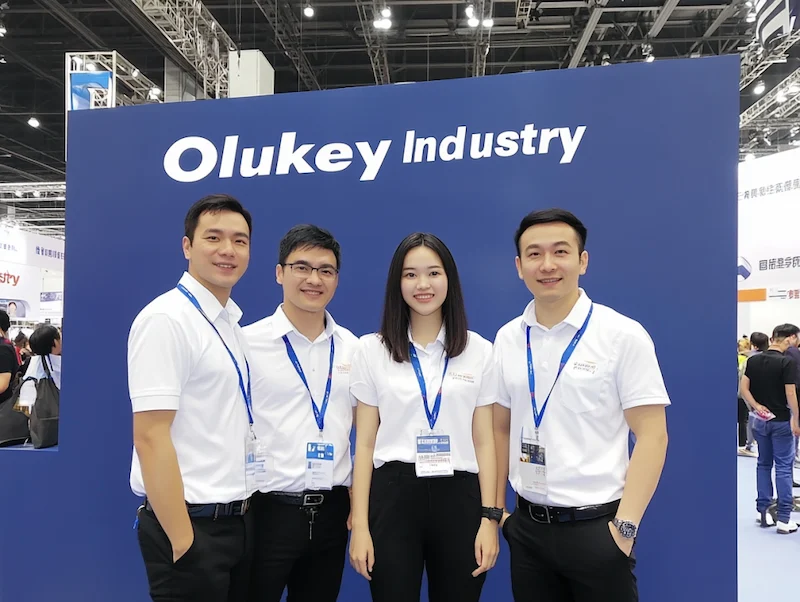
HONGKONG Olukey INDUSTRY CO., LIMITED is an integrated solution provider specializing in electronic component engineering and supply chain management. Our product ecosystem focuses on three core pillars: WINSOK MOSFETs, Cmsemicon MCUs, and custom PCBA circuit board solutions.
At present, Olukey Industry's offerings serve key sectors including automotive systems, aerospace applications, smart industrial platforms, renewable energy infrastructure, advanced healthcare devices, 5G networking nodes, IoT devices, smart homes, and consumer electronics. By leveraging distribution relationships with original component manufacturers, we deliver component integration services throughout the Asia-Pacific region and global industrial corridors.
Olukey Industry operates on a quality-centric philosophy: "quality first, service first." Rather than offering simple component brokerage, we provide integrated technical support. By aligning WINSOK MOSFETs with Cmsemicon MCUs, we design complete, functional PCBAs for motor drives, high-frequency chargers, and battery management systems (BMS).
Through long-term cooperation with domestic and international chip manufacturers, we ensure structural price advantages and maintain robust inventory levels. This supply stability shields your production lines from market fluctuations and unexpected shortages.
A reference guide detailing voltage, package type, and typical motor-drive applications across different power levels.
| Voltage Range | Silicon Package Options | Ideal Motor Control Topology | Typical Applications |
|---|---|---|---|
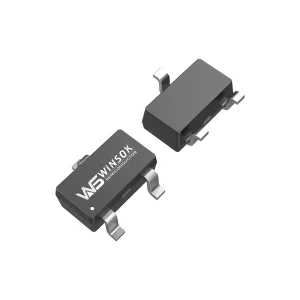
| 15V - 40V | DFN3X3-8, SOP-8, SOT-23 | Low-Voltage H-Bridge / Three-phase BLDC | Smart home actuators, handheld power tools, CPU cooling fans |
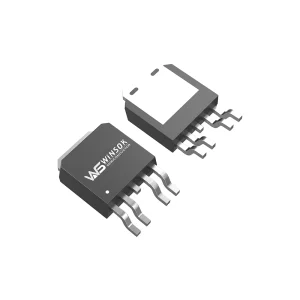
| 60V - 100V | DFN5X6-8, TO-252, TO-263 | Medium-Voltage Brushless DC Drivers / FOC | Electric scooters, material handling robots, warehouse AGVs |
| 120V - 200V | TO-220, TOLLA-8L, TO-263 | Industrial AC/DC Motor Drives & Solar Pumps | Garden equipment, outdoor pump controllers, heavy e-mobility |
| 250V - 650V | TO-220, TO-263 | High-Voltage PMSM Vector Drive Systems | Industrial CNC machinery, commercial HVAC blowers, EV drivetrains |
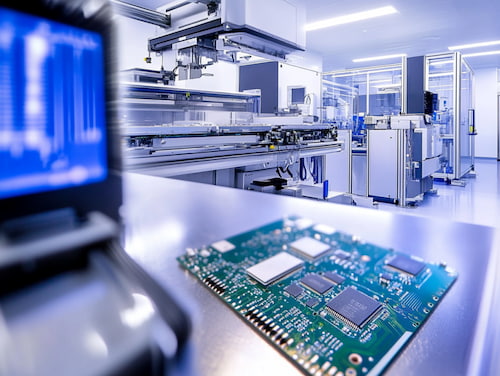
A look at the assembly lines and precision validation equipment driving Olukey Industry's quality output.

Global procurement teams in the automotive, defense, and industrial automation sectors balance three primary demands when purchasing power semiconductors: component reliability, stable pricing structures, and long-term supply chain security. Because power MOSFETs operate in high-temperature, high-vibration, and high-stress environments, a single device failure can halt an entire automated assembly line or disable a vehicle's electric steering system.
To mitigate these risks, procurement strategies are shifting away from relying on single semiconductor manufacturers. Purchasing managers now build redundant supply chains using cross-referenced alternative brands that match standard footprints (such as those from WINSOK). This approach protects factories from regional logistical bottlenecks and helps lower overall component costs.
China's semiconductor packaging and testing ecosystem offers notable speed and cost efficiencies. The local supply chain integrates raw silicon wafer processing, lead-frame fabrication, epoxy molding compound production, and high-volume automated testing in close proximity. This concentrated infrastructure minimizes transit times and keeps production overhead low.
In addition, Chinese factories leverage automated optical inspection (AOI), X-ray quality scanners, and automated tape-and-reel systems to maintain high yield rates. For global buyers, this translates to faster lead times—often just 4 to 6 weeks for custom configurations, compared to 20+ weeks from traditional Western fabrication facilities.
When designing high-power motor drives, component layout is critical. Poor PCB layouts can lead to thermal runaway, excessive electromagnetic interference (EMI), and premature MOSFET failures. Below are key engineering practices to optimize performance:
Browse our catalog of medium-voltage, low-resistance MOSFETs designed for industrial motor drivers and power management systems.
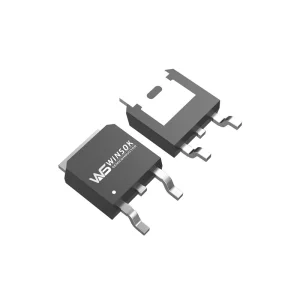
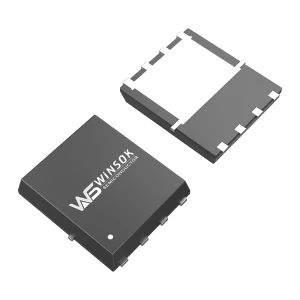
WINSOK's low-voltage and medium-voltage MOSFET range (15V to 650V) is engineered for high thermal performance and efficient power conversion. Key architectural advantages include:
With over 600 models and 40+ package configurations, WINSOK provides reliable drop-in alternatives for tier-1 semiconductor brands, facilitating simpler component procurement.
Clear, direct answers to common design and purchasing questions regarding MOSFET integration in motor drive systems.
Low gate charge reduces the drive current required from the gate driver IC during high-frequency switching. This speeds up transitions between turn-on and turn-off states, lowering cross-conduction risk and minimizing switching losses.
N-Channel MOSFETs offer higher carrier mobility and lower $R_{DS(on)}$ for the same silicon area compared to P-Channel devices, making them the standard choice for high-power low-side switch applications. P-Channel MOSFETs are sometimes preferred on the high side of lower-power drives because they simplify gate-driver circuitry by eliminating the need for a bootstrap capacitor.
In inductive motor-driving topologies, phase currents continuously commute through the MOSFET's body diode. A high $Q_{rr}$ can trigger large reverse currents when the opposite MOSFET turns on, leading to efficiency losses and potential component failures from overcurrent stress.
Our engineering support team compares parametric data sheets—including $R_{DS(on)}$, $V_{GS(th)}$, $Q_g$, and thermal resistance coefficients—to identify matching alternative parts. This cross-referencing helps maintain production continuity when primary brand lead times increase.
DFN3x3 and DFN5x6 packages feature exposed thermal pads that solder directly to the PCB ground planes. This layout reduces parasitic package inductance, improves heat dissipation through internal board layers, and enables lower-profile, lighter system designs.
We provide full PCBA development services. By combining Cmsemicon MCUs with WINSOK power MOSFETs, we design, test, and manufacture custom control boards to meet specific size, efficiency, and communication requirements.
 Olukey