In the rapidly advancing arena of Unmanned Aerial Vehicles (UAVs), power density, thermal efficiency, and dynamic responsiveness are the primary factors defining flight envelope limitations. The core of every drone's propulsion system resides in its Electronic Speed Controller (ESC). Operating under high switching frequencies, the ESC demands MOSFETs (Metal-Oxide-Semiconductor Field-Effect Transistors) engineered with minimal parasitic capacitance, ultra-low On-State Resistance ($R_{DS(ON)}$), and rapid switching characteristics to translate lithium-polymer battery energy into smooth, high-torque brushless DC (BLDC) motor rotation.
As drone systems scale from lightweight consumer FPVs to heavy-payload industrial agricultural sprayers, logistics cargo drones, and military tactical aircraft, off-the-shelf switching components often fail to satisfy tight space constraints and harsh thermal operating margins. This whitepaper analyzes the mechanical, thermal, and electrical architectures required for custom drone MOSFET replacements and establishes the procurement framework necessary for global OEMs and industrial supply chain directors to secure highly reliable, tailored semiconductor solutions.
The global drone market is undergoing a paradigm shift from recreational toys to industrial-grade working assets. This transition necessitates an evolution in the power distribution board (PDB) and ESC design. High-precision industries demand extreme reliability under varying atmospheric conditions:
Optimizing a MOSFET for drone replacement is not a one-size-fits-all engineering task. Engineers must map the electrical component profiles to localized environmental and payload stresses:
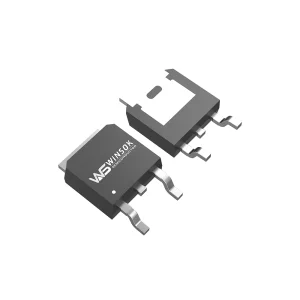
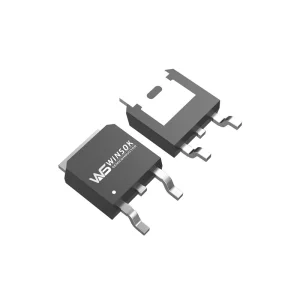
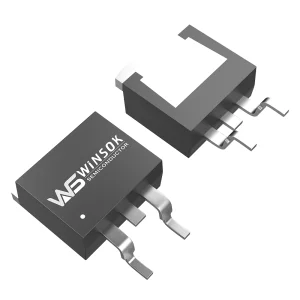
1. High-Voltage Multi-Cell Battery Systems (6S to 12S LiPo): Modern industrial drones operate on 24V to 50V battery stacks. A typical ESC layout for a 12S system requires MOSFETs rated for at least 100V to 150V breakdown voltage ($V_{DSS}$) to safely absorb the inductive voltage spikes generated by high-frequency motor commutation without relying on large, heavy snubber circuits. For instance, the WSF70N10 (100V, 65A, TO-252-2L) provides the ideal voltage margin and low internal resistance to ensure safe operation.
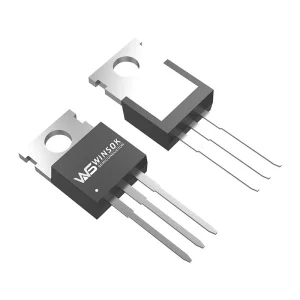
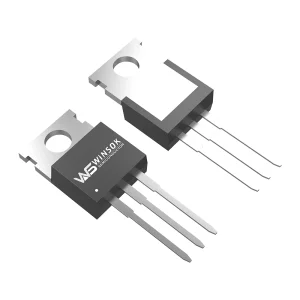
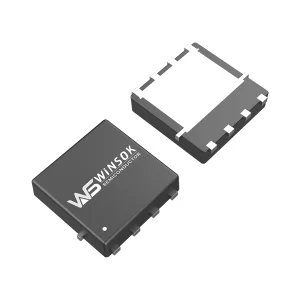
2. Thermal Impeding Environments (Closed Canopy Designs): Industrial military/inspection drones often employ sealed waterproof chassis, resulting in zero convective cooling. Here, MOSFETs must feature incredibly low junction-to-case thermal resistance ($R_{\theta JC}$). Standard packaging like TO-220F-3L (e.g., WSR22N50F) or DFN5X6-8L allows engineers to attach thermal interfaces directly to the drone's carbon fiber chassis, turning the structural frame into a passive heat sink.
When sourcing custom MOSFET components, global businesses require a balance of cutting-edge technology, rapid prototyping, and cost control. Hongkong Olukey Industry Co., Limited and its manufacturing hubs in Shenzhen represent the pinnacle of semiconductor efficiency and agility.
China's mature electronics ecosystem enables deep vertical integration. Olukey Industry acts as a single-source solution provider, offering three synergistic product lines: WINSOK MOSFETs, Cmsemicon MCUs, and comprehensive PCBA design/development services. This proximity to the world's primary raw silicon processing and packaging lines allows Chinese factories to rapidly adjust lead times. What typically takes Western manufacturers 24 to 36 weeks for customization and tape-out can be accomplished by Shenzhen-based engineering teams in 8 to 12 weeks.
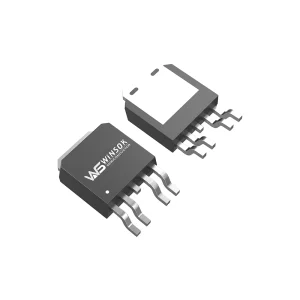
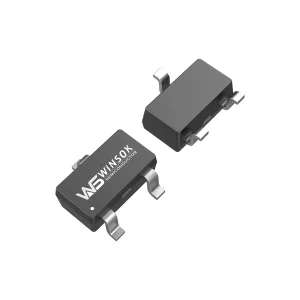
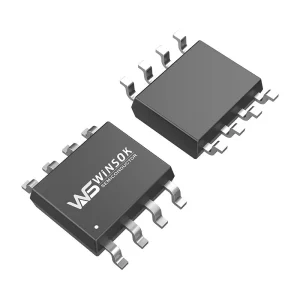
Furthermore, the economies of scale generated by servicing the massive domestic industrial drone market allow Winsok to supply advanced packages—ranging from DFN3X3-8, DFN5X6-8, to TO-252, TO-263, SOP-8, SOT-23, and TO-220—at a fraction of the cost of legacy brands, without sacrificing strict ISO-9001 and AEC-Q101 testing standards.
As flight times push past the 60-minute mark, the demand for highly efficient switches has accelerated research into wide-bandgap (WBG) semiconductors like Gallium Nitride (GaN). However, Silicon MOSFETs remain the commercial champion due to their ruggedness, avalanche energy ($E_{AS}$) resilience, and cost-effectiveness.
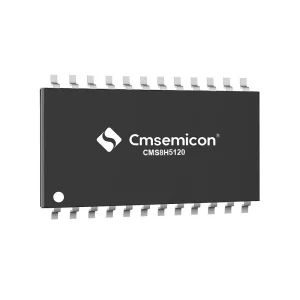
The current engineering trend focuses on optimizing the Silicon Figure of Merit (FOM = $R_{DS(ON)} \times Q_g$). By shrinking the gate trench structures, WINSOK MOSFETs achieve lower gate charges, meaning cheaper, smaller Gate Drivers (often integrated within Cmsemicon MCUs like the CMS8H5120) can drive the MOSFETs without excessive heat generation. Concurrently, packaging technologies are moving towards top-side cooling packages, allowing double-sided thermal dissipation architectures on advanced ESC boards.
Optimize Gate Charge ($Q_g$), Gate-to-Drain Charge ($Q_{gd}$), and On-State Resistance ($R_{DS(ON)}$) to match specific switching frequencies from 20kHz to 150kHz in brushless motor drives.
Custom packaging architectures including DFN3X3-8L, DFN5X6-8L, and TO-263 for low thermal impedance, facilitating direct heat dissipation to drone frames.
Enhanced Avalanche Ruggedness ($E_{AS}$ capability) to withstand harsh back-EMF spikes from sudden motor stalls, eliminating the risk of switch failure mid-flight.
Complete product packages linking WINSOK MOSFETs with Cmsemicon MCU architectures and bespoke PCBA development, delivering turnkey speed-controller systems.

HONGKONG Olukey INDUSTRY CO., LIMITED is a solution provider focusing on the overall solution of electronic product components. The main products mainly include: WINSOK MOSFET, Cmsemicon MCU, PCBA circuit board solution development and other three types of product lines.
At present, the products of Olukey Industry are widely used in automotive electronics, military electronics, smart industry, new energy, smart medical care, 5G, Internet of Things, smart home, and various consumer electronics products. Relying on the advantages of global general agents of major original factories, we are based in the Asia-Pacific market. Provide customers with various advanced high-tech electronic components by using comprehensive superior services, assist manufacturers in producing high-quality products and provide comprehensive services.
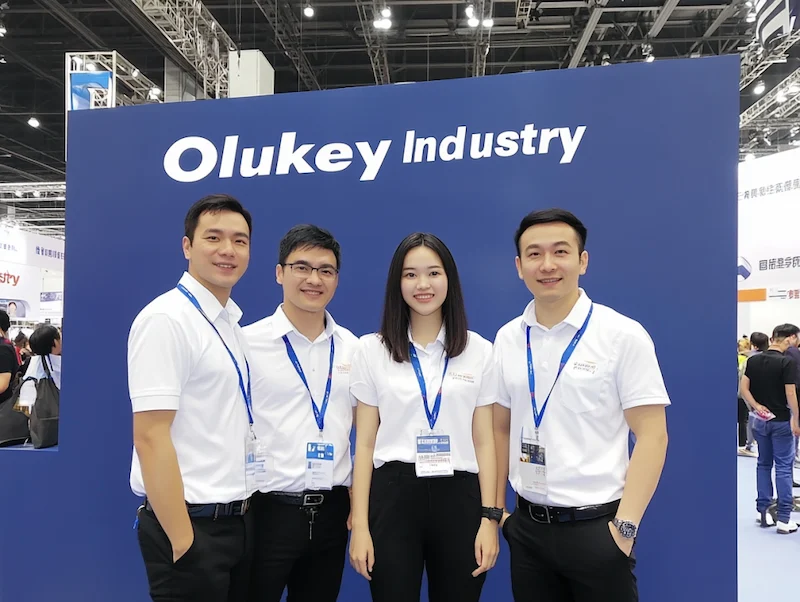

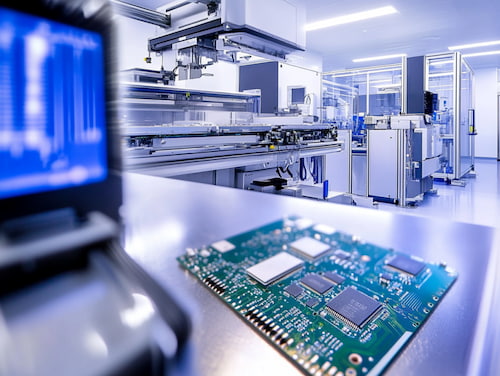
We use comprehensive high-quality services to provide customers with various types of advanced high-tech electronic components, assist manufacturers in producing high-quality products and provide comprehensive services. Over the years, the company has relied on reputation to survive, adhering to the tenet of "quality first, service first", and has established good cooperative relationships with many high-tech enterprises and original manufacturers at home and abroad.
WINSOK MOSFET's product voltages are mainly medium and low voltage: 15V, 20V, 30V, 40V, 60V, 80V, 100V, 120V, 150V, 200V, 250V, 300V, 400V, 500V, 600V, 650V. The main packages include DFN3X3-8, DFN5X6-8, TO-252, TO-263, SOP-8, SOT-23, TO-220, etc. There are more than 600 models and more than 40 packages. Extensive coverage of medium-voltage and low-voltage MOSFET product lines on the market.

 Olukey