High-efficiency, low-to-medium voltage semiconductor solutions engineered to exceed legacy data center components.
Decoding the shifts in server architecture, thermal management, and power density requirements driving the ODM market.
The explosive rise of generative AI workloads demands unprecedented server processing power. Modern graphics processing units (GPUs) and application-specific integrated circuits (ASICs) push server drawer power requirements past 100kW per rack. Achieving this power density necessitates ultra-low RDS(on) (Drain-Source On-State Resistance) MOSFETs to mitigate conduction losses and maintain peak operational efficiency.
To reduce transmission losses (I2R), standard server architectures are rapidly shifting from traditional 12V backplanes to high-efficiency 48V distribution networks. This transition places greater stress on point-of-load (POL) buck converters, elevating the demand for high-reliability 80V to 150V MOSFETs capable of executing fast switching cycles with minimal gate charge losses.
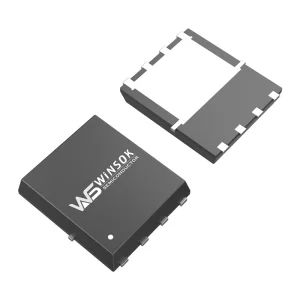
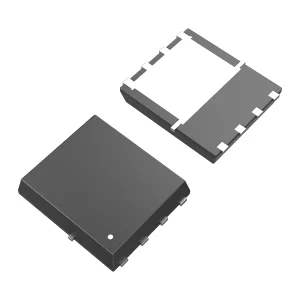
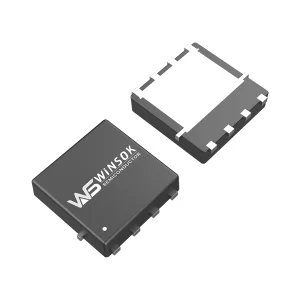
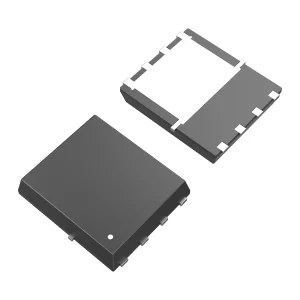
Data center operating costs are heavily governed by Power Usage Effectiveness (PUE). Reduced switching losses mean less ambient heat generation, decreasing reliance on energy-intensive air or liquid cooling systems. Direct replacement components with advanced thermals, packaged in footprints like DFN5X6-8 and DFN3X3-8, optimize thermal dissipation directly through the system PCB.
How Tier-1 procurement teams mitigate risks, address component obsolescence, and maintain product life cycle continuity.
Enterprise sourcing for data center hardware requires a meticulous balancing act between technical parameter compatibility, supply chain security, and total cost of ownership (TCO). High-reliability replacement MOSFETs allow server manufacturers to transition away from sole-sourced components without compromising platform integrity or redesigning complex PCBs.
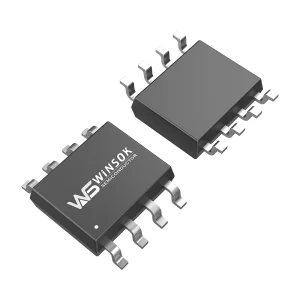
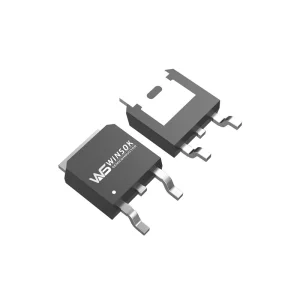
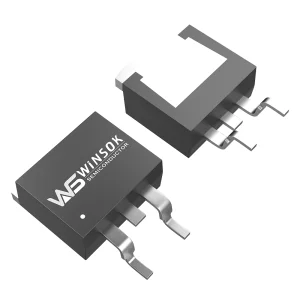
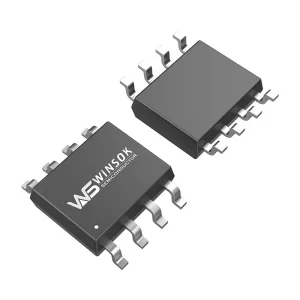
Hardware designers focus on pin-to-pin, electrical-equivalent cross-references. Sourcing replacements that align with standard industry package options (such as TO-252, SOP-8L, and DFN packages) guarantees that existing layouts do not require costly board spins. This optimizes the Bill of Materials (BOM) without prolonging the time-to-market.
Geopolitical tensions, component shortages, and fab allocation limits have shown that relying on a single silicon provider is a systemic vulnerability. Modern enterprise procurement incorporates dual-source strategies at the design level, integrating reliable ODM/OEM brands to ensure manufacturing lines run continuously under volatile market conditions.
Industrial and data center infrastructure is planned for multi-decade life cycles. While mainstream semiconductor giants often issue End-of-Life (EOL) notices for older nodes to prioritize consumer market chips, specialized ODM providers maintain long-term production availability of low-to-medium voltage products to support legacy infrastructure upgrades.
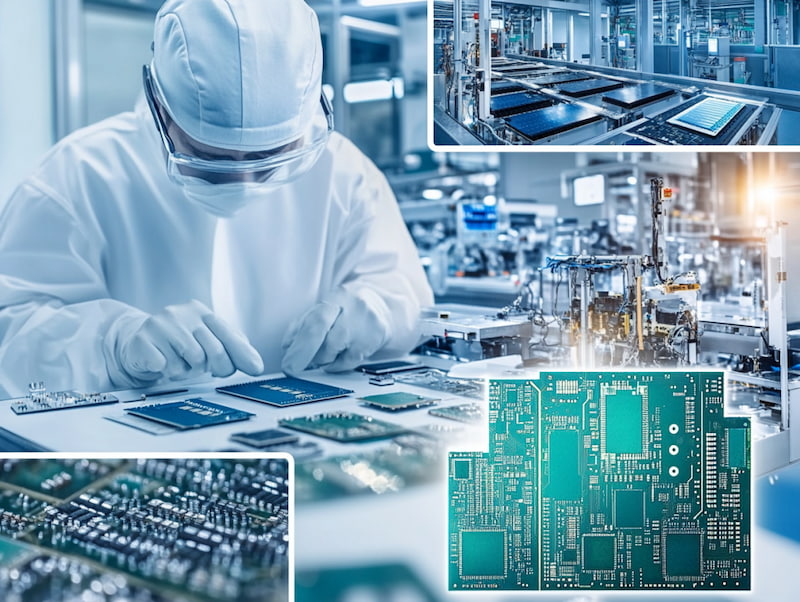
By leveraging the structural efficiencies of highly integrated industrial clusters and automated fabrication technologies, our manufacturing ecosystem provides unparalleled scaling capabilities for global server infrastructure vendors.
Modern semiconductor assembly in China has progressed beyond cost advantages, transitioning to Smart Factory 4.0 execution. Fully automated packaging lines, high-precision automated optical inspection (AOI), and rigorous wafer-level testing ensure zero-defect compliance levels across high-volume production runs.
Through regional concentration in areas like Shenzhen and the Pearl River Delta, silicon wafer sourcing, package lead frames, and testing facilities are situated within close proximity. This tight spatial integration reduces lead times down to weeks instead of months, offering agile response mechanisms to sudden spikes in cloud infrastructure demand.
HONGKONG Olukey INDUSTRY CO., LIMITED: Your Global Integrated Component Partner.
HONGKONG Olukey INDUSTRY CO., LIMITED is an established solution provider focusing on the overall integration of high-quality electronic components. Our product portfolio spans three core divisions: WINSOK MOSFETs, Cmsemicon MCUs, and customized PCBA circuit board solution development.
Currently, our advanced semiconductor components are deployed globally across diverse fields, including automotive electronics, aerospace/military applications, industrial IoT, renewable energy systems, smart medical technology, 5G networking, and smart home appliances. By leveraging general agent relationships with leading component manufacturing plants, we serve the Asia-Pacific and wider global markets, offering seamless technical support and supply chain security.
We combine high-performance product sourcing with end-to-end design assistance. Over the years, we have built reputational equity based on the core values of "quality first, service first." Through direct collaborative partnerships with domestic and international high-tech enterprises and original equipment manufacturers, we establish stable supply pipelines that protect our clients from price volatility and component shortages.
A deep dive into WINSOK's comprehensive package coverage, voltage options, and strategic partnership synergies.
Our power semiconductor division delivers a broad range of low-to-medium voltage parameters. WINSOK MOSFET product voltages span key options: 15V, 20V, 30V, 40V, 60V, 80V, 100V, 120V, 150V, 200V, 250V, 300V, 400V, 500V, 600V, and 650V. This diverse operational scale ensures compatibility with power supplies ranging from low-power logic boards to high-power industrial rectifiers.
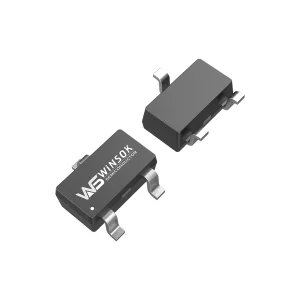
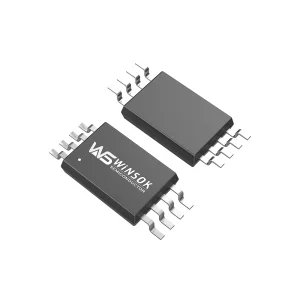
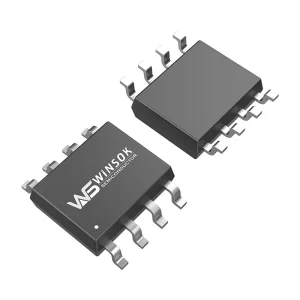
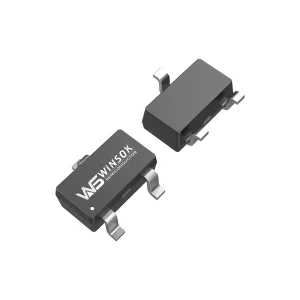
To facilitate drop-in replacements, our package lineup includes industry-standard formats: DFN3X3-8, DFN5X6-8, TO-252, TO-263, SOP-8, SOT-23, TO-220, and others. With over 600 models and 40+ package variations, we provide extensive coverage across the entire low-to-medium voltage market spectrum.

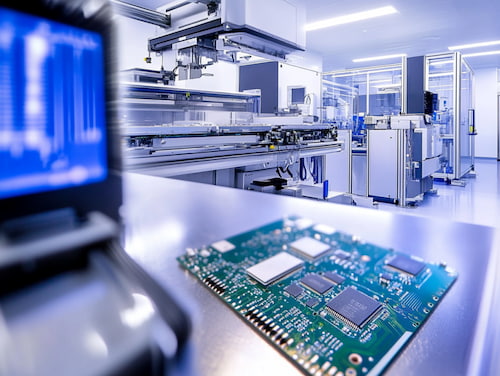
Complementing our power products, our partnership with Cmsemicon MCU provides microcontrollers designed for intelligent, software-defined power systems. This synergy enables us to deliver complete system-level solutions, combining processing power and switching efficiency for developers building unified power management platforms.
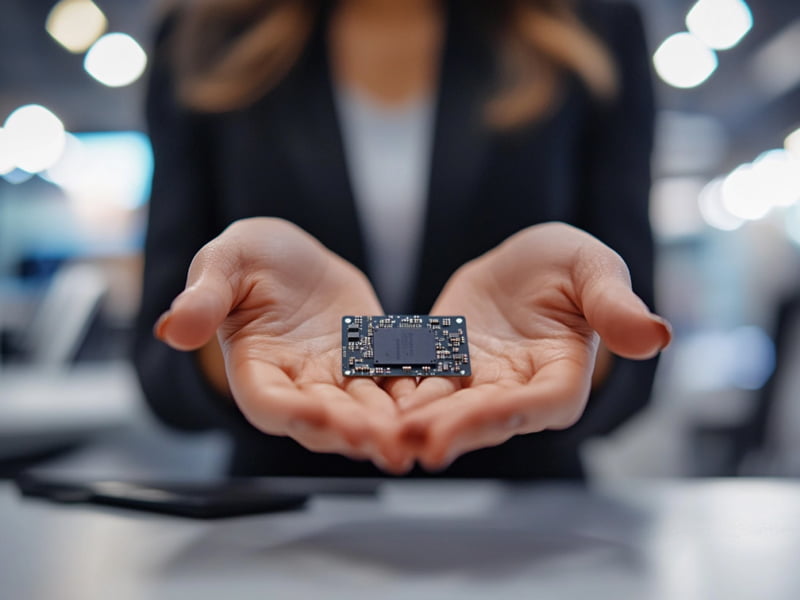
How WINSOK MOSFETs and Olukey solutions integrate into key parts of the modern cloud infrastructure ecosystem.
In high-availability server power supplies, redundant configurations are coupled using ORing MOSFETs. These switches remain continuously active to prevent reverse currents during power faults. WINSOK’s low RDS(on) DFN5X6-8 models (replacing AON6226, AONS6292, etc.) minimize conduction losses, lowering operating temperatures inside the power supply units.
For intermediate conversion stages on hyperscale motherboards, half-bridge and full-bridge topologies convert 48V distribution power to a lower voltage bus. Utilizing high-performance 80V to 150V N-channel MOSFETs helps designers balance low gate charges with high avalanche ruggedness, securing stability during load transients.
Modern CPUs, GPUs, and TPUs require clean, high-current power delivered at low voltages (often sub-1V). In multi-phase buck converters supplying these processors, dual N-channel MOSFETs (such as the WSD4098) optimize space and efficiency, enabling compact, high-current switching directly adjacent to the processor socket.
Answers to common technical and sourcing questions asked by hardware engineers and component procurement directors.
High-voltage switches, complementary pairs, and specific packages designed to meet specialized power circuit requirements.
 Olukey