In the era of Industry 4.0, power systems demand unprecedented efficiency, thermal management, and power density. MOSFETs (Metal-Oxide-Semiconductor Field-Effect Transistors) form the structural backbone of power electronic converters, motor drives, smart grid actuators, and robotics systems.
As automation transitions towards higher switching frequencies and smaller form factors, traditional silicon architectures must push the limits of efficiency. Achieving low drain-source on-state resistance (RDS(on)) and minimizing gate charge (Qg) are vital parameters to reduce conduction and switching losses.
This whitepaper explores how Chinese semiconductor manufacturing ecosystems, pioneered by companies like HONGKONG Olukey INDUSTRY CO., LIMITED and their primary brands such as WINSOK MOSFET and Cmsemicon MCU, provide globally competitive, highly reliable, and cost-effective power supply solutions. We break down parameters, supply-chain dynamics, and structural reliability metrics that position Chinese factories at the center of the global industrial supply network.

Understanding the foundation of our engineering expertise, distribution networks, and production quality.
HONGKONG Olukey INDUSTRY CO., LIMITED is a highly integrated, global solution provider focusing on the overall architecture of electronic product components. Our technology portfolio primarily spans three highly synchronized categories: WINSOK MOSFETs, Cmsemicon MCUs, and bespoke PCBA circuit board solutions and development.
At present, the solutions pioneered by Olukey Industry are widely integrated into automotive electronics, industrial robotics, intelligent control loops, new energy installations (solar and wind power management), advanced medical systems, 5G infrastructures, IoT nodes, smart home ecosystems, and high-tier consumer electronics.
Leveraging our deep connections as global agents and key distribution partners for major original component manufacturers, we maintain a dominant presence within the Asia-Pacific market. We provide global OEMs and system integrators with direct access to advanced electronic components, backed by end-to-end technical support and custom reference design boards. Our goal is to streamline manufacturing and guarantee performance consistency under extreme industrial operations.
A deep dive into parameters, packages, and switching dynamics engineered for harsh industrial environments.
Winsok MOSFET portfolios focus primarily on medium and low-voltage thresholds, structured precisely to handle the transient overvoltages and current spikes typical in industrial power grids and motor starters.
| Key Parameter Class | Specifications & Availability | Typical Industrial Applications |
|---|---|---|
| Voltage Range (Vds) | 15V, 20V, 30V, 40V, 60V, 80V, 100V, 120V, 150V, 200V, 250V, 300V, 400V, 500V, 600V, 650V | Low-voltage DC-DC converters, mid-voltage BLDC drives, high-voltage offline switch-mode power supplies (SMPS). |
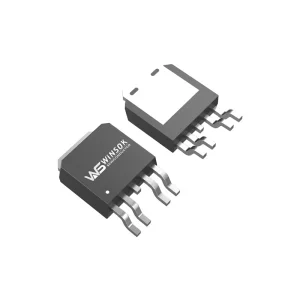
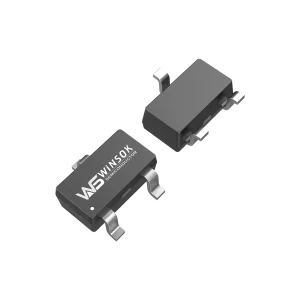
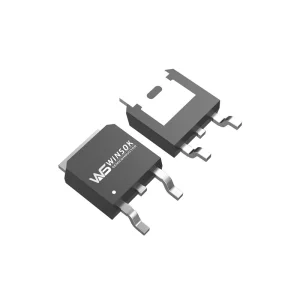
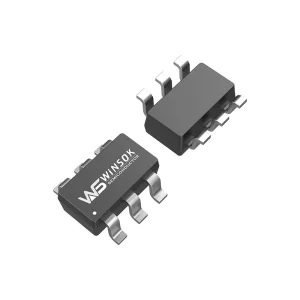
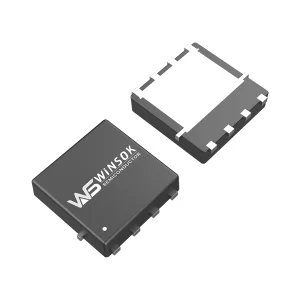
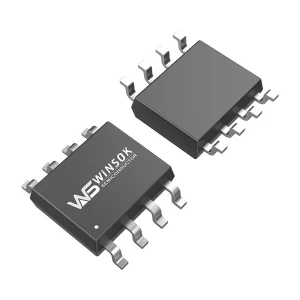
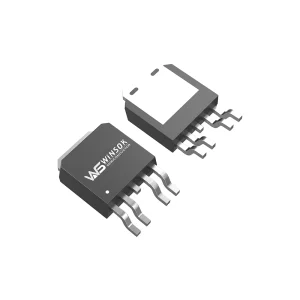
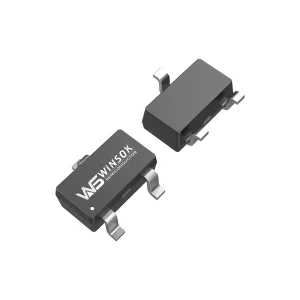
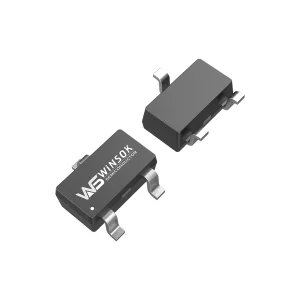
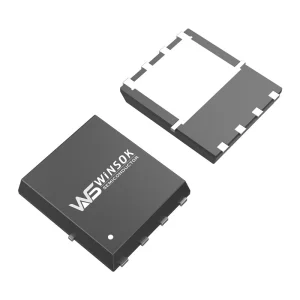
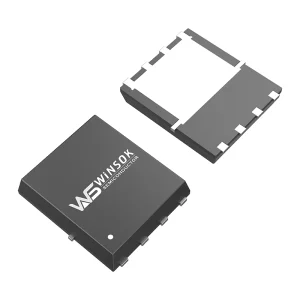
| Packaging Options | DFN3X3-8, DFN5X6-8, TO-252, TO-263, SOP-8, SOT-23, TO-220, and 30+ other variations | High thermal efficiency footprints (DFN, TO-263) for dense industrial PCBA layouts; leaded packages (TO-220) for easy heat-sink integration. |
| Product Models | Over 600 unique active configurations | Drop-in pin-to-pin replacement alternatives for global Tier-1 semiconductor brands. |
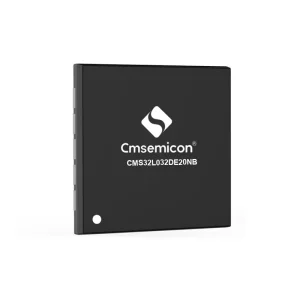
| MCU Integration | Cmsemicon 8-bit & 32-bit Cortex M0+ MCUs (e.g., CMS32L032) | Sensor hubs, motor control loops, system diagnostic systems. |
By pairing Winsok MOSFETs with Cmsemicon MCUs, Olukey provides a unified hardware loop. The MCU generates high-frequency PWM (Pulse Width Modulation) signals, while the MOSFETs act as the execution switches. This integration minimizes impedance mismatches, stabilizes gate-drive oscillations, and ensures robust protection against short circuits, overtemperature spikes, and electrostatic discharges.
Utilizing trench gate designs to lower unit-area RDS(on), reducing power loss in high-current continuous conduction systems such as servo motor drivers.
Enables faster switching transits, minimizing the time spent in the high-dissipation linear active region and decreasing dynamic switching losses.
DFN5X6-8 and TO-252 packages exhibit low junction-to-case thermal resistance (Rthjc), maintaining operational safety margins up to 175°C junction temperature.
Why global procurement chains are shifting towards Chinese direct-to-factory semiconductor supply models.
Chinese semiconductor clusters, especially in regions like Shenzhen and Shanghai, bring together silicon wafer sourcing, design houses, packaging plants, testing facilities, and logistics centers into a highly integrated regional ecosystem. This proximity minimizes raw material transit delays and allows factories to adapt production schedules in real-time to mitigate global chip supply shortages.
China's domestic semiconductor industry is shifting rapidly from low-cost production to advanced packaging and wafer processing. Utilizing 8-inch and 12-inch wafer processing facilities, factories achieve tighter gate-oxide thickness control and superior parameter distribution consistency. As a result, components like the WSD45P10DN56 and WSD4062DN56 offer performance metrics comparable to legacy Western brands.
Winsok MOSFETs are designed to act as direct pin-to-pin, electrical-parameter-equivalent replacements for legacy parts from major manufacturers (including Alpha & Omega, ON Semi, Infineon, and STMicroelectronics). This allows design teams to bypass complex PCB redesign steps, optimize their component bill of materials (BOM), and establish supply redundancies without introducing layout errors.


By operating at high volumes and utilizing vertically integrated packaging technologies (such as copper clip bonding in DFN formats), Chinese factories reduce unit costs. These cost savings are passed directly to international procurement teams, reducing BOM expenses by 20% to 40% compared to legacy components, without compromising long-term reliability.
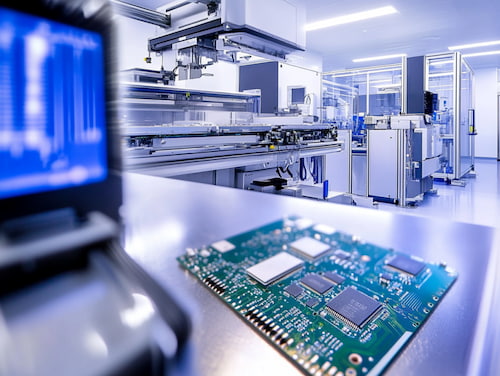
Industrial environments present harsh conditions, including high vibration, extreme temperature cycling, and electrical noise. Chinese manufacturers utilize strict quality control pipelines to meet standards like AEC-Q101 (for automotive components) and JEDEC specifications, ensuring high reliability and consistent performance across production runs.
How our components perform in the field, enabling energy-efficient designs and high-performance automation.
Medium-voltage MOSFETs like the WSD4062DN56 (40V, 62A) are widely used in H-bridge inverters for Brushless DC (BLDC) motors. Low RDS(on) reduces thermal loads within compact motor housings, allowing designers to build smaller, more power-dense driver modules.
Industrial control cabinets require robust switched-mode power supplies (SMPS) to convert primary grid AC power into stable 24V or 12V DC lines. High-voltage Winsok MOSFET configurations (such as 600V and 650V TO-220/TO-263 models) handle high-frequency switching to improve efficiency and reduce the size of inductors and capacitors.
Programmable Logic Controllers (PLCs) utilize arrays of digital output switches to drive solenoids, relays, and indicators. Small-signal and medium-power MOSFETs in SOT-23 and SOP-8 packages (such as the WST4040 and AO4832) provide high switching speed and low drive current, enabling direct control from MCU output pins.
Modern industrial automation systems increasingly interface with clean energy grids and decentralized energy storage units. Battery management systems (BMS) in industrial facilities require high-current bidirectional protection switches to prevent cell damage from overcharging and thermal runaway.
By deploying dual N-channel or combined N+P channel MOSFET packages, such as the WSD3023DN56 (N+P 30V/-30V) or WSF3013B (N+P -30V/30V TO-252-4L), engineers can reduce component counts and improve space efficiency on PCBs. These dual configurations are ideal for reverse-polarity protection, load switching, and battery management, ensuring system reliability in rugged industrial designs.
Addressing supply security, batch consistency, and quality assurance for industrial engineering buyers.
For supply chain directors and engineers, sourcing semiconductors requires balancing component cost against the risks of assembly errors and line downtime. Our Quality Assurance program is designed around four key operational values:
How current research and market shifts shape the next generation of power switches.
The power semiconductor market is undergoing a transition driven by efficiency mandates and the rise of wide-bandgap (WBG) technologies. While Silicon (Si) MOSFETs remain the workhorse of industrial electronics due to their cost-effectiveness and reliability, wide-bandgap materials like Silicon Carbide (SiC) and Gallium Nitride (GaN) are expanding in high-power and high-frequency environments.
To maintain competitiveness, Chinese factories are investing heavily in Silicon-on-Insulator (SOI) technologies, superjunction designs, and advanced package concepts. For example, replacing standard wire-bonded packages with copper-clip packaging significantly reduces parasitic inductance, helping mitigate high-frequency voltage ringing and EMI.
Additionally, modern motor designs (meeting IE3 and IE4 efficiency standards) require power switches with minimized conduction losses. The integration of smart sensors directly onto the silicon die (integrated thermal and current sensors) is an emerging technology trend, providing real-time telemetry to the controlling MCU to prevent system overstress before failure occurs.

When designing power sections for next-generation industrial devices, designers focus heavily on spatial optimization. Using advanced DFN3X3-8 and DFN5X6-8 packages helps reduce the board space required by traditional TO-220 styles by up to 60%, without sacrificing thermal performance. This space reduction allows designers to place drivers closer to actuator terminals, reducing parasitic wiring loops and improving overall system efficiency.
Additionally, combining N and P-channel MOSFETs in a single package helps reduce component counts and simplify routing on complex multi-layer PCBs, minimizing design complexity and lowering final assembly costs.
Providing technical answers to common queries from component designers and procurement managers.
The primary electrical parameters to match include Drain-Source Voltage (Vds), Continuous Drain Current (Id), Gate-Source Threshold Voltage (Vgs(th)), and Drain-Source On-state Resistance (RDS(on)) measured at equivalent Vgs levels. Additionally, review the Gate Charge (Qg) and thermal resistance parameters (Rthjc) to ensure equivalent performance under transient thermal loads. Winsok offers comprehensive cross-reference charts to guide this matching process.
DFN (Dual Flat No-leads) packages like DFN3X3-8 and DFN5X6-8 feature exposed thermal pads on the bottom. This allows for direct soldering to the PCB copper, using the board as a heat sink and reducing thermal resistance. Additionally, the lack of external leads reduces package inductance, which improves switching efficiency and helps mitigate EMI issues at high frequencies.
Our quality verification process includes High-Temperature Reverse Bias (HTRB), High-Temperature Gate Bias (HTGB), electrostatic discharge (ESD) robustness testing, and cyclical thermal shock assessments. These tests confirm the reliability of the gate-oxide layer and the packaging structure under typical industrial operating stress.
Yes, P-channel MOSFETs simplify high-side switching circuits because they do not require an auxiliary charge pump or isolated gate driver to turn on (unlike N-channel high-side switches). This makes them a common choice for battery protection circuits and load switches, where minimizing driver complexity and cost is a priority.
Standard lead times for high-volume orders average 4 to 6 weeks, depending on the required packaging style and volume. We also maintain a rotating buffer stock of common MOSFET and MCU models in our domestic warehouses to enable rapid delivery for established customers.
The Cmsemicon MCU runs the motor control algorithm (such as Field-Oriented Control, or FOC) and generates PWM waveforms. These waveforms drive the gates of the Winsok MOSFETs (often via a gate driver) to regulate power to the motor coils. This hardware combination helps reduce switching noise and optimizes efficiency in compact motor setups.
 Olukey