Engineered for High Reliability and Pin-to-Pin Equivalence in HVAC & Motor Control Applications
The global heating, ventilation, and air conditioning (HVAC) sector is undergoing a massive transformation driven by stringent energy-efficiency regulations (such as SEER 2 in North America and ErP directives in Europe) and the accelerating transition toward low-carbon footprint lifestyles. Central to this transformation is the paradigm shift from traditional fixed-speed on-off compressors to modern, variable-frequency inverter air conditioning systems. Within an inverter system, the power semiconductor stage serves as the gatekeeper of efficiency, translating incoming main power into precisely controlled variable-frequency signals that drive the compressor and fan motors.
As a result, global demand for highly reliable power MOSFETs has scaled exponentially. Research indicates that the integration of premium MOSFETs within air conditioners can reduce dynamic switching and static conduction energy losses by up to 25% compared to legacy architectures. This efficiency directly impacts the end-user's energy bills and helps OEM manufacturers attain top-tier energy star ratings. In addition to residential units, the transition is expanding into commercial Variable Refrigerant Flow (VRF) setups, industrial cooling chillers, and automotive thermal management systems—particularly in Electric Vehicles (EVs) where thermal efficiency is directly linked to battery range.
When design engineers, procurement specialists, and supply chain directors search for the "Latest design MOSFET for air conditioner equivalent," their intent is rarely just about finding a generic component. The core user intent is motivated by three main challenges:
Over-reliance on single Western power semiconductor brands can expose air conditioner manufacturers to long lead times, production delays, and unexpected product end-of-life (EOL) announcements.
Maintaining competitive margins on consumer appliances requires reducing the bill-of-materials (BOM) cost without compromising structural reliability or electrical performance.
Engineers require pin-to-pin, footprint-compatible equivalents that precisely match or exceed key metrics like $R_{DS(on)}$, Gate Charge ($Q_g$), Safe Operating Area (SOA), and thermal resistance ($R_{thJC}$).
To satisfy this user intent, HONGKONG Olukey Industry Co., Limited, together with WINSOK MOSFET, offers a comprehensive cross-reference database. This database provides direct pin-to-pin replacements for major global brands (such as Infineon, ON Semiconductor, STMicroelectronics, and Toshiba). By optimizing thermal resistance and leveraging the latest Trench technology, WINSOK equivalents often run cooler and require fewer board design modifications, enabling seamless drop-in replacements during critical product design cycles.
Air conditioner electronics are highly complex and contain multiple subsystems, each demanding unique semiconductor profiles. Below are the primary localized applications where Olukey's solution range—consisting of WINSOK MOSFETs, Cmsemicon MCUs, and custom PCBA solutions—is deployed:
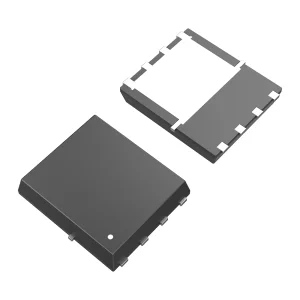
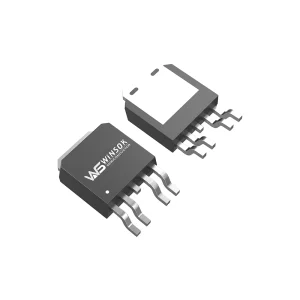
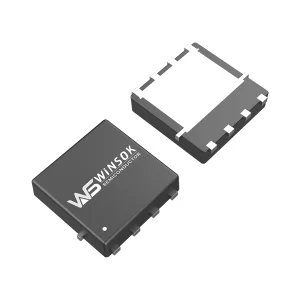
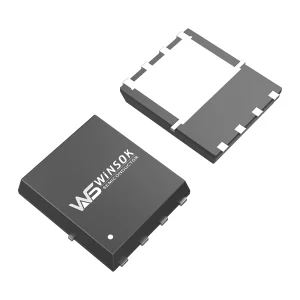
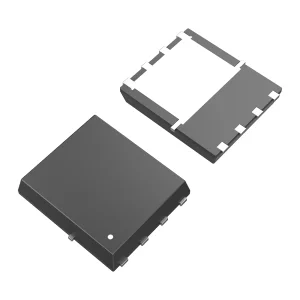
Modern indoor and outdoor AC units use Brushless DC (BLDC) fan motors for variable speed control. This requires precise switching in the inverter bridge. Devices like the WSF34V10 N+P Channel MOSFET (100V/100V 30A/-26A in a TO-252-4L package) or WSD46N10DN56 Dual N-Ch MOSFET (100V 40A in DFN5X6-8L) are used to drive the three-phase motor bridge. The integrated dual-channel design saves PCB space and reduces routing complexity, leading to overall lower EMI signatures.
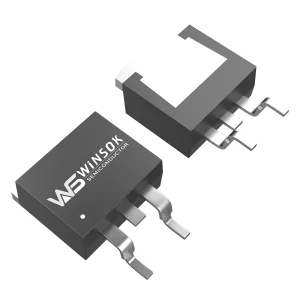
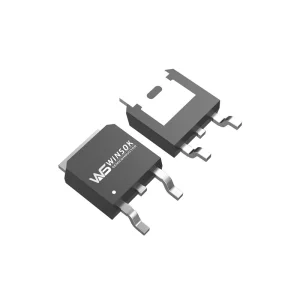
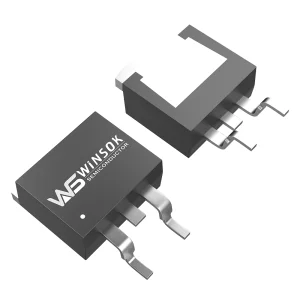
The compressor motor requires high-voltage capability and low conduction loss. Medium-to-high voltage MOSFETs like the WSF10N40 (400V 30A in TO-252-2L) provide the robust voltage blocking margins needed to survive transient voltage spikes on the AC mains, while maintaining a very low $R_{DS(on)}$ to keep thermal emission under control.


To comply with global harmonics regulations, modern ACs feature active Power Factor Correction. High-current N-channel MOSFETs, such as the WSK150N15 (150V 150A in a TO-263-2L package) or WSD40110DN56G (40V 110A in DFN5X6-8), are utilized to implement high-frequency boost converters. This ensures the unit draws clean sinusoidal current from the grid with power factor values exceeding 0.98.
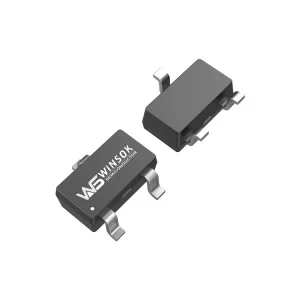
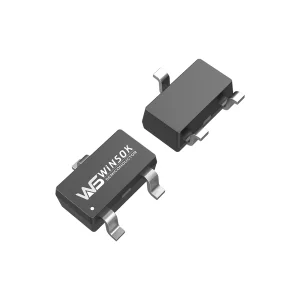
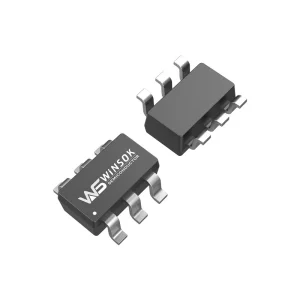
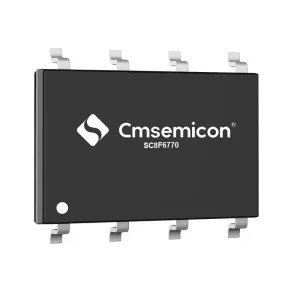
Low-voltage logic control circuits need highly efficient step-down conversion. Small-signal MOSFETs like the WST2333A (P-channel -12V -6A SOT-23-3L) and WSTBSS123 (N-channel 100V 2A SOT-23-3L) are used in signal switching, power rail distribution, and auxiliary SMPS circuits. When paired with high-performance 8-bit microcontrollers, such as the SC8F6771 RISC Microcontroller, they establish a highly responsive control system.
The production of high-volume power semiconductors requires massive capital, deep technical expertise, and a flexible supply chain. By aligning with China's semiconductor ecosystem (the "Silicon Delta" clustering Shenzhen, Hong Kong, and the wider Greater Bay Area), Olukey Industry leverages significant structural advantages to benefit global customers:


HONGKONG Olukey INDUSTRY CO., LIMITED is an electronic component solution provider. The company's core product portfolio is built on three main product lines:
Olukey Industry products are widely used in automotive electronics, military applications, smart industrial control systems, new energy solutions, smart medical devices, 5G networking equipment, the Internet of Things (IoT), smart home ecosystems, and high-end consumer electronics. By partnering with leading original component manufacturers, Olukey provides comprehensive technical support and logistics services, helping OEMs streamline production and bring high-quality products to market.

To achieve a successful cross-reference replacement for an HVAC controller, engineers must verify key electrical parameters. Here is a step-by-step guideline to matching equivalents:
The equivalent MOSFET must have a $V_{DS}$ rating equal to or higher than the original part. For example, if you are replacing a 100V device in a BLDC motor control unit, selecting the WSF34V10 (100V rated) or the WSD46N10DN56 (100V rated) ensures adequate voltage overhead to withstand back-EMF surges from the motor windings.
$R_{DS(on)}$ is the main factor determining static conduction losses. Equivalent MOSFETs should have an equal or lower $R_{DS(on)}$ at the target gate-drive voltage ($V_{GS}$). Replacing an older TO-252 MOSFET with the latest trench design, such as the WSF6038 (60V, 24A, low $R_{DS(on)}$), can lower temperatures and improve thermal efficiency.
In high-frequency switching circuits (such as PFC boost converters or SMPS), switching losses can exceed conduction losses. $Q_g$ determines how fast the MOSFET can switch between on and off states. WINSOK's advanced trench technology minimizes parasitic gate capacitances, resulting in faster switching transitions and lower driver power requirements.
For high-current applications, heat dissipation is critical. When switching from leaded packages like TO-220 or TO-252 to modern surface-mount packages like DFN5X6-8, thermal management changes significantly. Selecting high-density packages, such as the WSD40110DN56G (40V 110A DFN5X6-8), provides a low junction-to-case thermal resistance ($R_{thJC}$), allowing heat to dissipate directly into the PCB ground planes.
The HVAC industry is moving toward higher levels of integration and smart diagnostic features. Future control systems will require MOSFETs with built-in current sensing, over-temperature protection, and real-time diagnostic reporting back to the primary MCU.
Additionally, as motor control algorithms transition from traditional Field-Oriented Control (FOC) to sensorless sensor-vector algorithms, microcontrollers like the SC8F6771 will require faster switching MOSFET arrays to resolve micro-step positions without acoustic motor noise. WINSOK is continually developing ultra-low RDS(on) silicon solutions to help meet these evolving system demands.

Complete Range of Medium & Low Voltage MOSFETs and Advanced RISC Microcontrollers
Providing Clarity on MOSFET Equivalents, Cross-Referencing, and Global Sourcing
 Olukey