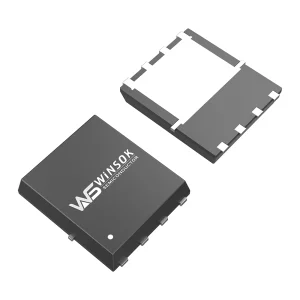
Explore our premium select range of ODM / OEM alternative power MOSFETs engineered for performance-critical drone systems and propulsion electronics.
An in-depth look at how semiconductor efficiency dictates flight range, thermal mitigation, and mission reliability in aerospace ecosystems.
The propulsion and battery management mechanisms of Unmanned Aerial Vehicles (UAVs) have entered a period of rapid development. Historically, drone systems operated on relatively simple electronic speed controllers (ESCs) that managed minimal electrical loads. However, the modern industrial, commercial, and agricultural UAV landscape demands heavy-payload lifting capacities, vertical take-off and landing (eVTOL) agility, and extended flight operational windows. Consequently, the primary power distribution systems must support extremely high current loads, while minimizing onboard weight.
In these complex systems, the metal-oxide-semiconductor field-effect transistor (MOSFET) functions as the core solid-state switch. Modern UAV ESCs utilize high-frequency Pulse Width Modulation (PWM) to drive three-phase brushless DC (BLDC) or permanent magnet synchronous motors (PMSM). During this process, switching frequencies regularly exceed 20 to 50 kHz. Any inefficiency in the MOSFET's switching transition results in severe heat accumulation, degrading system efficiency and introducing potential failure vectors. As a result, Tier-1 UAV manufacturers are migrating from legacy planar MOSFET structures to advanced trench-gate topologies, demanding optimized parameters for total gate charge ($Q_g$) and extremely low drain-source on-resistance ($R_{DS(on)}$).
SEO Insight & Technical Trend: High-efficiency replacements for OEM brands like Infineon, AOS, STMicroelectronics, and ON Semi are no longer just cost-saving strategies; they are structural requirements for maintaining supply chain fluidity in the global UAV manufacturing sector.
When designers identify alternative MOSFET components for UAV battery management systems (BMS) and electronic speed controllers, they must run exhaustive pin-to-pin, electrical, and thermal equivalence verifications. The key parameters driving performance include:
Providing global engineering clients with unparalleled vertical supply integration, advanced micro-manufacturing, and verified reliability.
Over 600 models covering critical medium and low-voltage thresholds: 15V, 20V, 30V, 40V, 60V, 80V, 100V, 120V, 150V, 200V, 250V, 300V, 400V, 500V, 600V, 650V.
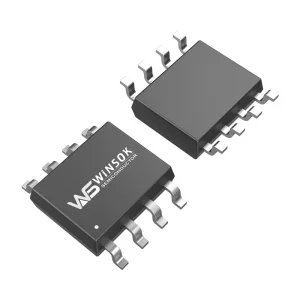
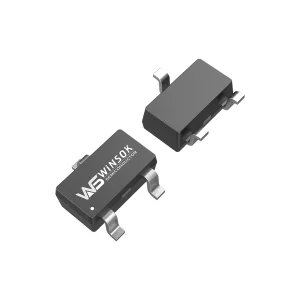
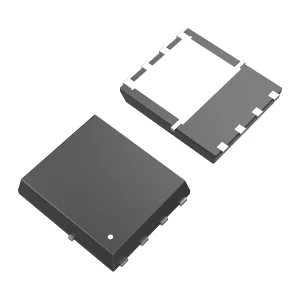
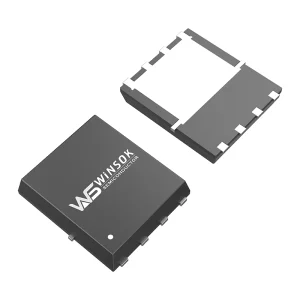
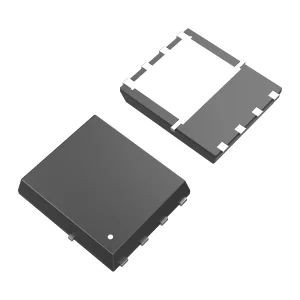
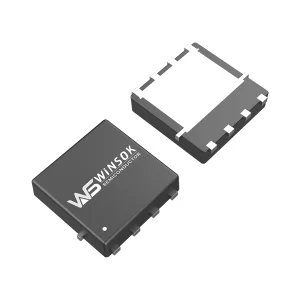
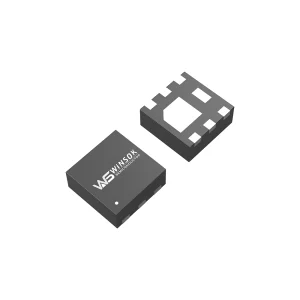
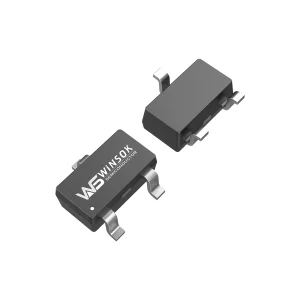
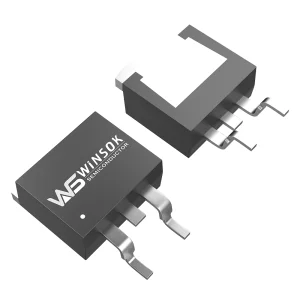
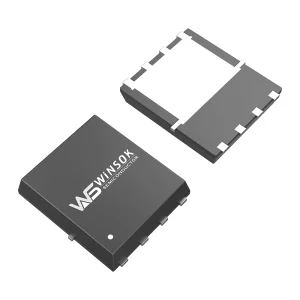
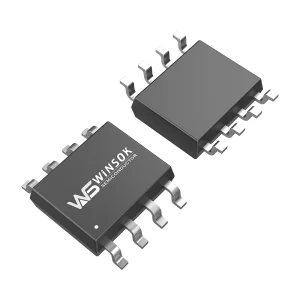
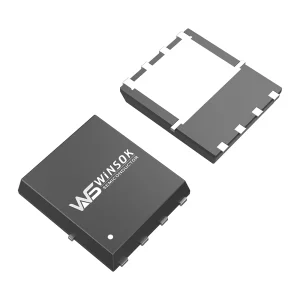
Available in DFN3X3-8, DFN5X6-8, TO-252, TO-263, SOP-8, SOT-23, TO-220, and more than 40 other industrial packages for seamless retrofitting.
Complete product design support including WINSOK MOSFETs, Cmsemicon MCUs, and customized PCBA circuit board system development.
The global semiconductor supply chain has faced historic bottlenecks, with lead times for traditional power semiconductor giants swelling to over 50 weeks in recent years. For industrial drone operations, such lead times disrupt production schedules and delay time-to-market. Consequently, procurement officers are shifting their sourcing models from single-source dependencies to agile dual-sourcing frameworks.
This transition has accelerated the deployment of high-performing alternatives that provide identical footprint layouts and electrical parity. The ability to source stable, in-stock ODM parts directly from China-based advanced fabrication hubs has become a cornerstone of supply chain risk mitigation. Design engineers are no longer focusing solely on brand names; they are qualifying equivalent parts based on strict laboratory evaluations of thermal profiles, avalanche durability, and structural packaging longevity.
China's power semiconductor fabrication infrastructure has evolved from basic assembly to advanced Industry 4.0 smart manufacturing. Cleanroom environments utilize automated optical inspection (AOI), high-precision robotic placement, and in-line wafer testing systems to monitor defects per million opportunities (DPMO) down to single digits.
By integrating advanced packaging technologies like copper-clip bonding, China-based factories eliminate the wire bonds that traditionally introduced parasitic inductances and resistance. This manufacturing advancement ensures that domestic ODM/OEM MOSFET components match, and often exceed, the transient thermal and high-frequency efficiency benchmarks set by traditional European or North American semiconductor developers. The outcome is a highly competitive, reliable product ecosystem with standard lead times under 8 weeks.
| WINSOK Part Number | Package Footprint | Polarity & Voltages | Common Cross-References | Primary Application Area |
|---|---|---|---|---|
| WSD75N12GDN56 | DFN5X6-8 | N-Ch 120V 75A | AON6264C, STL8DN6LF6AG | High-Power ESC, Propulsion Motors |
| WST2335A / WST3417 | SOT-23L | P-Ch -20V -5.8A | AOS3401, ST2301 | Signal Switching, Logic Circuits |
| WSD4070DN33 | DFN3X3-8L | N-Ch 40V 68A | AON7400, PDC3701T | Lightweight ESC, Miniature Drones |
| WSK42P10 | TO-263-2L | P-Ch -100V -42A | IPP084N06L, STP42P10 | BMS Protection, Heavy Load Switches |
Your Strategic Component Solution Partner, from Custom Silicon Design to High-Volume Turnkey PCBA Production.
HONGKONG Olukey INDUSTRY CO., LIMITED is a comprehensive global solution provider specializing in advanced electronic component architectures and integrated hardware systems. Our primary operational focus spans three core technology pillars: high-reliability WINSOK MOSFET arrays, high-performance Cmsemicon MCU microcontrollers, and custom-engineered PCBA circuit board solutions.
By anchoring our commercial operations in the Asia-Pacific region, we leverage direct partnerships with major semiconductor wafer fabs and packaging facilities to supply advanced parts across automotive, industrial, defense-grade aerospace, renewable energy, and internet-of-things (IoT) markets. Through a commitment to quality control and operational efficiency, we ensure our global clients achieve secure, cost-effective supply chains.
Guided by our foundational values of "Pragmatism, Win-win, Service, and Responsibility," Olukey Industry supports global manufacturing clients with deep technical expertise, robust logistics, and comprehensive engineering design services.




Expert answers addressing integration challenges, structural parameters, thermal engineering, and component cross-referencing.
When retrofitting an Electronic Speed Controller, the primary engineering criteria include ensuring $V_{DSS}$ provides a 30% margin over nominal battery voltage, confirming $R_{DS(on)}$ is equivalent or lower to prevent thermal runaways, and ensuring $Q_g$ and $Q_{gd}$ match closely. If the alternative component has a significantly higher $Q_{gd}$ gate charge, the gate driver integrated circuit (IC) may struggle to switch the MOSFET rapidly, resulting in prolonged transition times and high switching power loss. Additionally, package footprint coplanarity must match precisely to avoid solder joint fractures under high vibrational stresses.
N-channel MOSFETs possess higher electron mobility, resulting in significantly lower $R_{DS(on)}$ for the same silicon die size compared to P-channel counterparts. This makes N-channel MOSFETs the ideal option for high-current applications, such as propulsion motor drives and primary battery management pathways. P-channel MOSFETs, while exhibiting higher internal resistance, are simpler to drive because they do not require a charge pump or bootstrap circuit to generate a gate-source voltage ($V_{GS}$) higher than the source voltage. They are commonly implemented in reverse-polarity protection circuits, power paths, and load switches.
The DFN5X6-8 package utilizes a large underside thermal pad designed to transfer heat directly into the printed circuit board. To maximize this pathway, designers should place thermal vias directly beneath the pad to transfer heat to internal and bottom-side copper planes. Using 2oz or 3oz thick copper planes significantly increases lateral thermal spreading. Additionally, maintaining adequate spacing from other heat-generating components (like shunt resistors) helps prevent localized thermal bottlenecks.
Most industrial MOSFETs require a $V_{GS}$ of 10V to fully saturate and achieve their lowest rated $R_{DS(on)}$. Operating with a lower gate drive voltage (e.g., 5V) can lead to partial turn-on (linear region), which causes high power dissipation and can rapidly damage the device. In UAV applications, the gate driver must maintain a stable $V_{GS}$ even during battery voltage fluctuations. It is also important to select MOSFETs with a maximum $V_{GS}$ rating (typically ±20V) that can handle any inductive noise spikes on the gate drive line.
Yes, our ODM series are designed to be pin-to-pin, footprint-compatible drop-in replacements for standard industry packages like DFN5x6, DFN3x3, SO-8, and SOT-23. They conform to JEDEC package standards, meaning they share the same physical dimensions, pin configurations, and land patterns. However, we always recommend verifying parameters like gate charge ($Q_g$) and thermal properties ($R_{\theta JC}$) during the prototyping phase to ensure optimal performance in your specific circuit design.
Our manufacturing partners perform rigorous testing protocols on all components, including High-Temperature Gate Bias (HTGB), High-Temperature Reverse Bias (HTRB), Temperature Cycling, and Unclamped Inductive Switching (UIS) testing to verify avalanche ruggedness (EAS). These tests help ensure that our MOSFETs can withstand the high temperatures, electrical noise, and vibration common in demanding industrial and commercial UAV applications.
Review our supplementary catalog of high-current power transistors, dual-channel arrays, and robust package alternatives.
 Olukey