Explore our engineering-grade components deployed by global E-bike manufacturers for high-current, low-temperature operations.
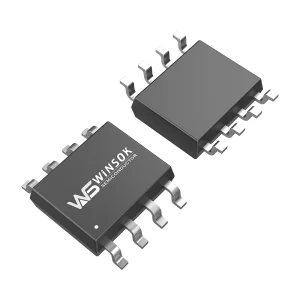
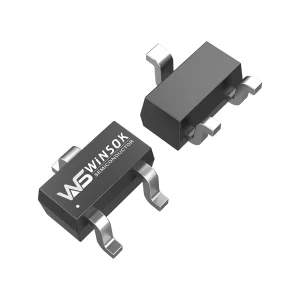
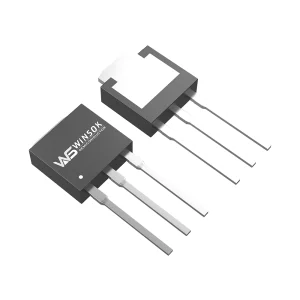
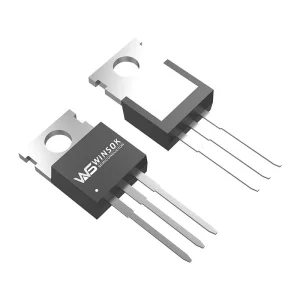
The global micro-mobility sector is undergoing rapid transformation, propelled by zero-emission regulations, urbanization, and energy efficiency demands. The electric bicycle (E-bike) is no longer merely a leisure transport device but a vital pillar of urban logistics and personal daily transit. At the heart of this electric mobility transition is the E-bike motor controller. Motor controllers regulate energy flow between the battery pack and the Brushless DC (BLDC) or Permanent Magnet Synchronous Motor (PMSM).
Reliability within these motor controllers depends directly on the switching efficiency and thermal properties of the Metal-Oxide-Semiconductor Field-Effect Transistors (MOSFETs). As E-bikes transition toward higher system voltages (from 36V and 48V architectures to 60V, 72V, and even higher), MOSFETs are subjected to severe electrical stress during start-up, regenerative braking, and heavy-load hill climbing. This structural change demands replacement parts that outperform OEM standards in breakdown voltage ($V_{DS}$), avalanche energy durability ($E_{AS}$), and packaging heat dissipation.
Global semiconductor supply chains are increasingly volatile. Original equipment manufacturers and repair centers face extended lead times for traditional European or Japanese component brands. Chinese semiconductor fabrication and packaging facilities have emerged as premium alternatives. Through modern trench fabrication technologies, specialized engineering support, and competitive cost structures, a E-bike replacement factory in China can secure reliable supplies while delivering equivalent or superior performance parameters.
As a seasoned Google SEO Optimization Director, I emphasize that understanding search intent means recognizing that procurement engineers do not simply search for "E-bike transistors". They look for robust replacement alternatives that can handle thermal spikes without compromising on unit costs. Establishing "Information Gain" involves presenting the exact physical, mechanical, and electrical parameters needed to carry out these cross-device swaps successfully.
Most field failures in E-bike motor controllers stem from transistor breakdown. The underlying causes generally trace back to three main degradation mechanisms:
As junction temperatures ($T_j$) rise, the internal resistance ($R_{DS(on)}$) of a silicon MOSFET increases, causing a loop of escalating conduction losses. If the thermal impedance ($R_{\theta JC}$) of the packaging is too high, the device exceeds its limits, resulting in catastrophic failure.
Inductive spike energy from the motor coils can exceed the breakdown voltage ($V_{DS}$) of the MOSFET during high-speed switching. Without sufficient single-pulse avalanche rating ($E_{AS}$), these transient voltage spikes melt the silicon structure.
High total gate charge forces the gate driver to supply more current to charge the input capacitance ($C_{iss}$). If the driver cannot supply this current, the transition time through the active region is prolonged, causing major switching losses.
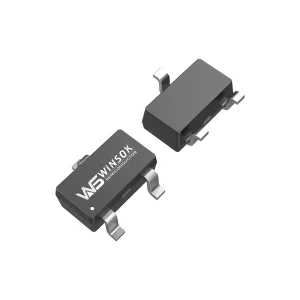
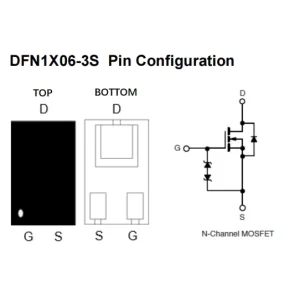
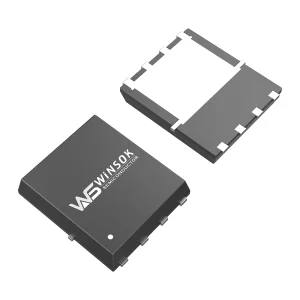
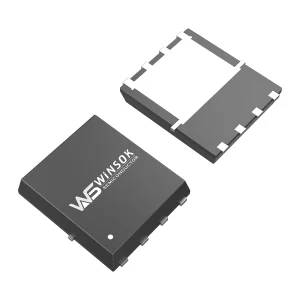
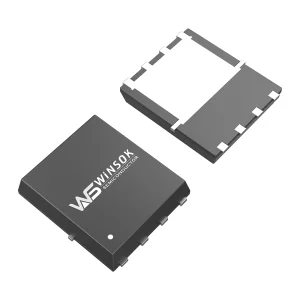
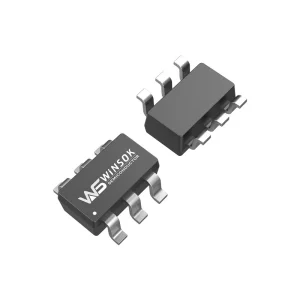
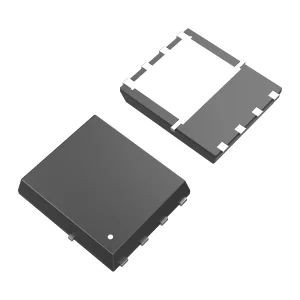
To resolve these technical problems, design engineers must select replacements that optimize the figure of merit (FOM), defined as $R_{DS(on)} \times Q_g$. Choosing a high-performance alternative, such as a WINSOK MOSFET, allows manufacturers to directly replace parts from international brands (like STMicroelectronics, Panjit, or Potens) without redesigning the controller PCB. For instance, the original STMicroelectronics STL5DN6F7, PANJIT PSMQC73N6NS1, or POTENS PDC696X can be crossed to high-density trench N-channel alternatives in DFN5X6-8 packages, lowering thermal output while matching pin configurations.
How Hong Kong Olukey Industry Co., Limited bridges manufacturing capacity with local market requirements.
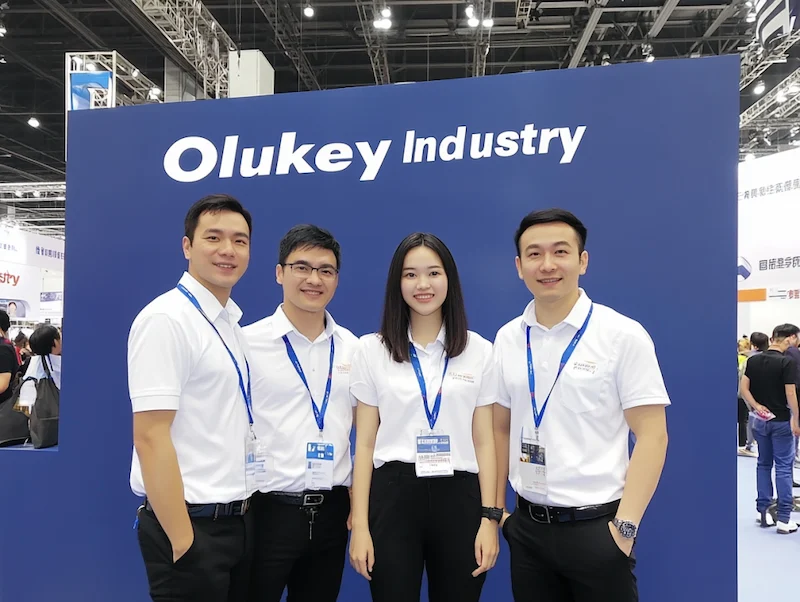
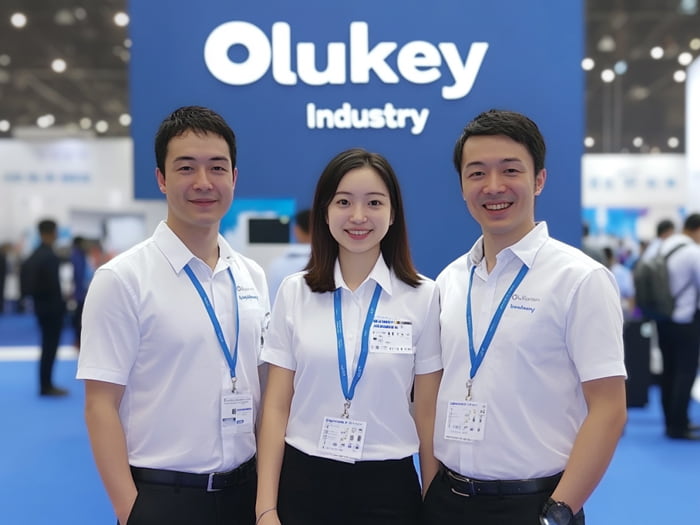
HONGKONG OLUKEY INDUSTRY CO., LIMITED is a leading solution provider focusing on the overall integration of electronic components. Our operations rest on three main pillars: WINSOK MOSFETs, Cmsemicon MCUs, and customized PCBA circuit board solutions.
At present, Olukey Industry's products are widely used in automotive electronics, military electronics, smart industry, new energy, smart medical care, 5G, the Internet of Things, smart homes, and various consumer electronic goods. Drawing on our access as a global general agent for major original semiconductor fabrication plants, we focus heavily on the Asia-Pacific market. We supply high-precision electronic components, supporting manufacturers with technical services and component security.
We provide comprehensive high-quality services to supply customers with advanced electronic components, assisting manufacturers in producing high-quality products. Over the years, the company has grown based on our industry reputation, adhering to the core principle of "quality first, service first". This focus has enabled us to establish long-term relationships with many high-tech enterprises and original manufacturers both domestically and internationally.
Relying on our global network of major original manufacturers, we are based in the Asia-Pacific market. Through active market development and resource integration, we have become one of the fastest-growing agents in the region, bringing years of professional distribution experience to our clients.
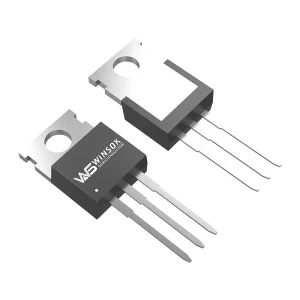
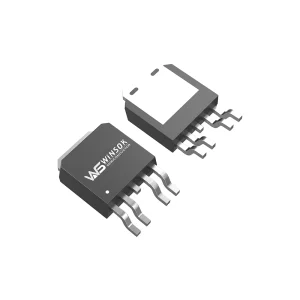
WINSOK MOSFET's product voltages are mainly medium and low voltage: 15V, 20V, 30V, 40V, 60V, 80V, 100V, 120V, 150V, 200V, 250V, 300V, 400V, 500V, 600V, 650V. The main packages include DFN3X3-8, DFN5X6-8, TO-252, TO-263, SOP-8, SOT-23, TO-220, etc. There are more than 600 models and more than 40 packages. This selection provides extensive coverage of medium-voltage and low-voltage MOSFET product lines on the market.
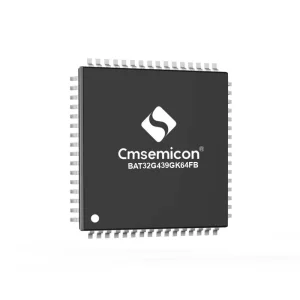
Additionally, Cmsemicon MCU is a microcontroller company born in Shenzhen, featuring rich product types and deep technical development experience. This pairing allows us to supply complete system-level solutions, combining microcontrollers with matching power stages.
Becoming a global high-value agent is the shared goal pursued by OLUKEY Industrial employees. We adhere to the corporate values of "Pragmatism, Win-win, Service and Responsibility", continuing to strengthen service quality. We work hand in hand with suppliers to explore larger markets and contribute to the semiconductor sector's development.

Different markets have specific design mandates and localized usage patterns that dictate MOSFET specifications:
Reputable E-bike replacement factories in China implement strict testing standards to match or exceed AEC-Q101 automotive criteria. These procedures include High-Temperature Gate Bias (HTGB), High-Temperature Reverse Bias (HTRB) testing, and strict ESD parameters (Electrostatic Discharge protection). Products must align with European RoHS and REACH directives, ensuring all components are lead-free and halogen-free to comply with global environmental legislation.
The power electronics sector is moving toward integrated architectures. By combining microcontrollers and power components on a single substrate, developers can reduce inductive loop losses. Olukey Industry's product roadmap focuses on aligning Cmsemicon 32-bit MCU platforms with WINSOK Power MOSFET modules. This integration simplifies E-bike controller design, reducing PCB footprint by up to 35% and improving thermal performance.
Newer product designs utilize deep trench field-stop technologies to lower the specific on-resistance ($R_{sp}$) of the silicon die. This design allows for higher current carrying capacities in smaller packages. DFN5x6-8 dual-channel layouts can replace bulky TO-220 packages in mid-power E-bike applications, facilitating more compact, water-resistant controller housings.
For high-power electric vehicles and premium E-bikes, the industry is transitioning from silicon to Gallium Nitride (GaN) and Silicon Carbide (SiC). Although silicon MOSFETs remain the standard for cost-sensitive E-bike controllers, our design laboratories are developing hybrid silicon/GaN topologies to enable faster switching frequencies and reduce filter capacitor sizing.
Insights from our engineering support team regarding MOSFET cross-referencing and E-bike controller maintenance.
Explore additional high-demand models in stock and ready for immediate deployment in E-bike controller applications.
 Olukey