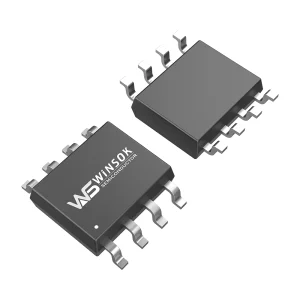
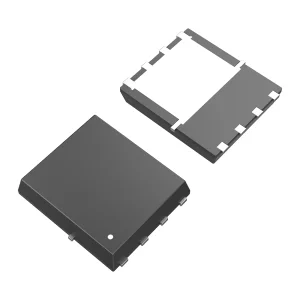
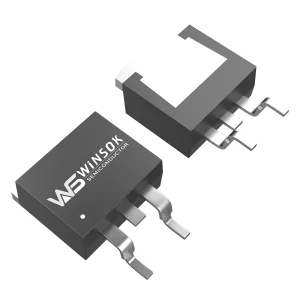
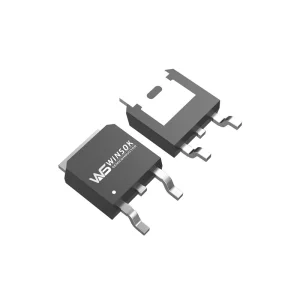
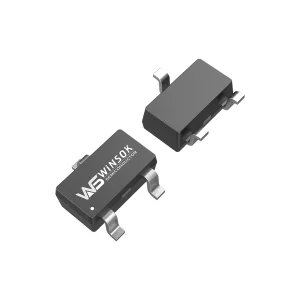
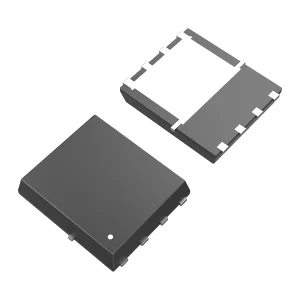
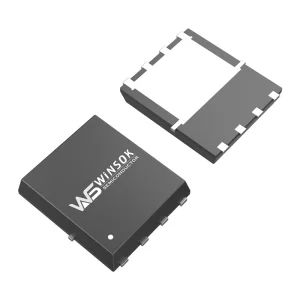
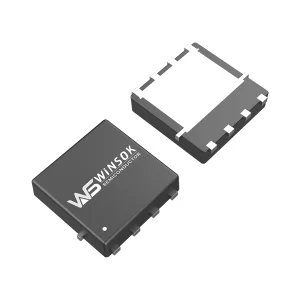
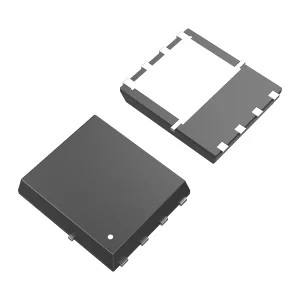
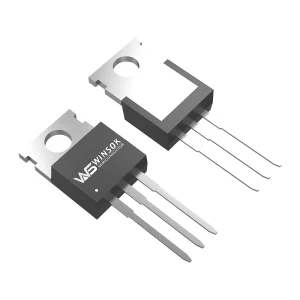
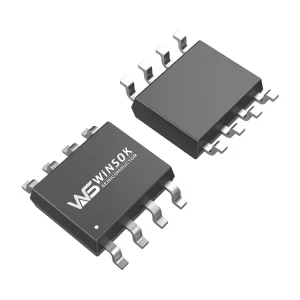
The global power tool landscape is experiencing a paradigm shift towards cordless, high-torque, and intelligent systems. Driving this transformation is the transition from brushed DC motors to Brushless DC (BLDC) motors. Without mechanical commutators, BLDC motors require a highly efficient electronic inverter stage—composed of a array of power MOSFETs—to manage alternating phases.
Modern power tools, such as impact drivers, reciprocating saws, and rotary hammers, demands high instantaneous currents during lock-rotor and peak-torque events. As a result, the demands on power semiconductors have intensified. The industry's evolution focuses on key metrics: minimizing RDS(ON) (static drain-source on-resistance) to limit conduction loss, optimizing Qg (total gate charge) to speed up switching transitions and reduce dynamic switching loss, and maintaining robust thermal dissipation paths through innovative packaging like DFN5X6-8, TO-263, and TO-252.
Furthermore, wide-bandgap integration and advanced silicon architectures have allowed manufacturers to push the boundaries of avalanche energy ruggedness ($E_{AS}$). Power tools frequently generate back-EMF spikes and encounter stall currents. Standard consumer-grade MOSFETs will fail under these transient conditions. Standard-compliant equivalent MOSFETs must display equivalent or superior avalanche ratings and integrated ESD protection to survive in demanding commercial environments.
Packaging innovations like DFN5x6-8L and SOP-8 dual configurations offer significantly reduced parasitic inductance compared to traditional leaded packages. By improving thermal resistance junction-to-case ($R_{thJC}$), developers can run higher continuous currents through a smaller footprint, critical for compact, ergonomic handheld tools.
For design engineers and global procurement officers, finding a viable drop-in equivalent for industry-standard MOSFETs (such as those from Infineon, AOS, STMicroelectronics, or Nexperia) is a strategic priority. However, mapping a component equivalent extends far beyond matching the package size and pinout.
To guarantee a safe drop-in replacement that performs reliably under extreme conditions, the following technical parameter tolerances must be carefully audited:
| Critical Parameter | Required Correlation Tolerance | Impact on Power Tool Performance |
|---|---|---|
| Drain-Source Voltage ($V_{DS}$) | Must be $\ge$ original specification (typically 20V to 150V) | Ensures the device survives inductive voltage spikes without breakdown. |
| Continuous Drain Current ($I_D$) | Must be $\ge$ original specification (up to 250A peak) | Prevents thermal runaway during motor stalling or heavy loads. |
| Static On-Resistance ($R_{DS(ON)}$) | Must be $\le$ original specification (ideally sub-2mΩ) | Lowers continuous heating, extending battery runtime and tool life. |
| Gate-Source Charge ($Q_{gs}$ & $Q_{gd}$) | Within $\pm 10-15\%$ to avoid altering gate driver timing | Maintains proper switching times, avoiding cross-conduction/shoot-through. |
| Reverse Recovery Charge ($Q_{rr}$) | Lower or equal to original values | Reduces high-frequency electromagnetic interference (EMI) and body diode losses. |
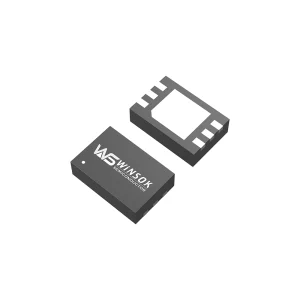
By utilizing top-tier, quality-certified brands like Winsok MOSFETs, engineering departments can source direct cross-references for widely used industrial part numbers. Whether replacing a high-current TO-263-2L in heavy-duty demolition hammers or a space-efficient SOP-8 or DFN3X3-8 in cordless screwdrivers, a technical validation of these key electrical parameters ensures seamless operation without redesigning the PCB.
Global supply chain volatility has highlighted the vulnerability of single-source procurement strategies. OEMs and ODMs in the power tool sector are actively diversifying their supplier networks, adopting "Dual Sourcing" or "China-Plus-One" schemes. When Tier-1 European or American component manufacturers experience lead times exceeding 30 to 50 weeks, industrial lines risk grinding to a halt.
The transition towards drop-in equivalent MOSFETs, with active stock availability in regional distribution hubs, protects manufacturers against geopolitical disruptions, logistics bottlenecks, and fab capacity allocation constraints. In-stock availability of versatile packages, such as the DFN5X6-8L and TO-252, ensures production schedules remain uninterrupted, directly enhancing time-to-market metrics.
Furthermore, total cost of ownership (TCO) optimization is a critical driver. Sourcing high-quality equivalent MOSFETs allows procurement managers to negotiate favorable pricing without compromising reliability. This dual-track strategy balances cost-efficiency with operational safety, transforming the electronics supply chain from a point of vulnerability into a competitive advantage.
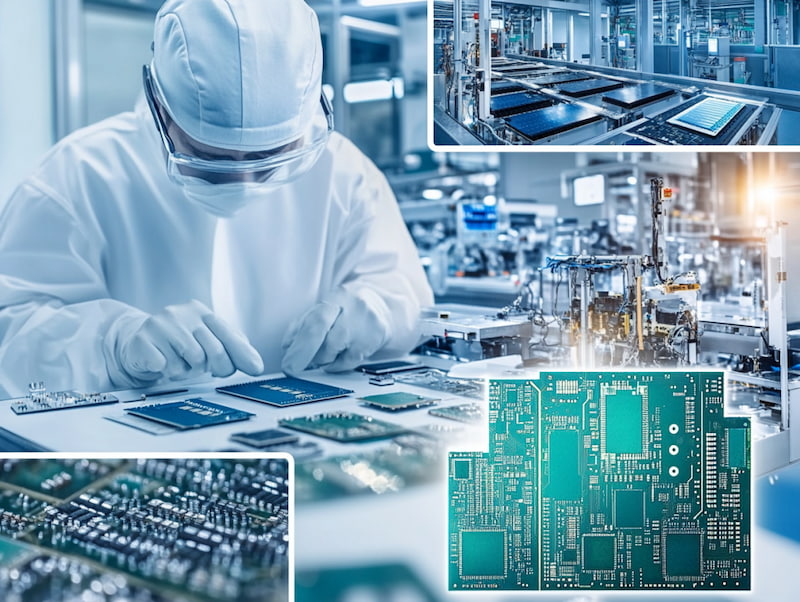
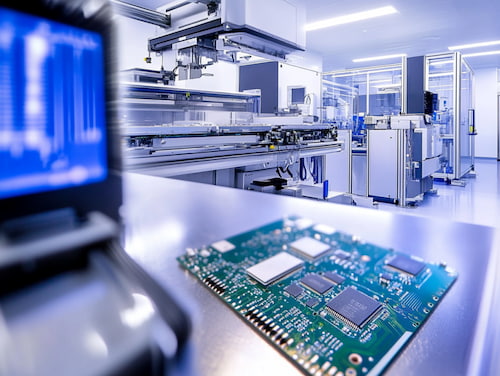
The Chinese semiconductor assembly and test ecosystem has evolved from a low-cost production hub into a highly automated, Industry 4.0-driven powerhouse. Modern semiconductor foundries and packaging plants leverage artificial intelligence, advanced machine vision, and real-time SPC (Statistical Process Control) systems to produce silicon components that rival the reliability of traditional Western chipmakers.
This automated approach ensures high package yield consistency and minimizes lot-to-lot variances—an essential requirement for power tools operating in harsh thermal environments. China's integrated supply chain ecosystem, which links raw silicon wafer processing, lead-frame fabrication, advanced high-conductivity epoxy molding, and automated test equipment (ATE), allows for exceptionally fast turnaround cycles.
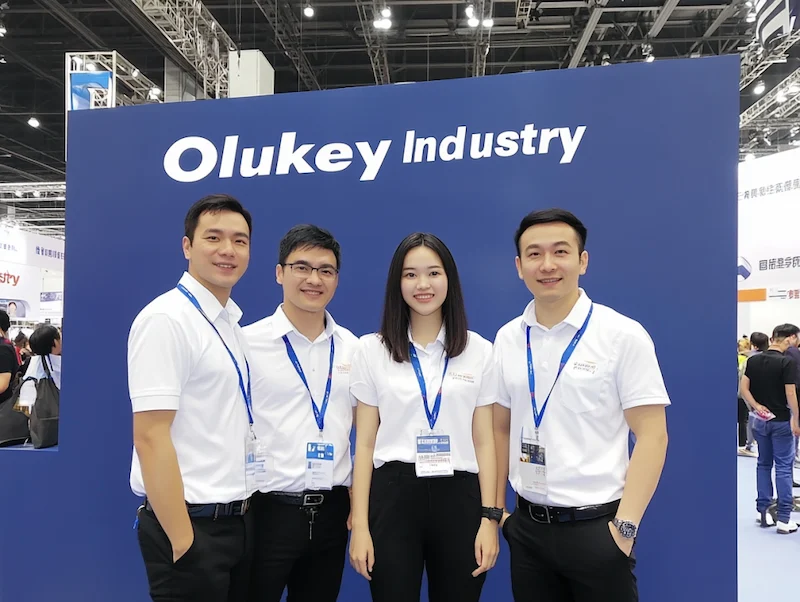
When global companies source products like Winsok MOSFETs via strategic regional partners like Hongkong Olukey Industry Co., Limited, they tap into a resilient, scalable infrastructure. This synergy yields shorter lead times, robust quality control certified under ISO9001/IATF16949 standards, and the flexibility to develop custom packages or customized parametric ratings.
Automated die-attach and wire-bonding systems minimize manual handling, reducing defects and maintaining consistent wire tension for high-vibration applications.
100% automated optical inspection (AOI) and electrical parameter binning screen out marginal parts before they ever leave the production line.
Support for diverse standard packages (DFN3X3, DFN5X6, TO-252, TO-220, SOT-23, SOP-8) to meet regional drop-in equivalent layout demands.
Power tools operates in diverse and demanding real-world conditions. Understanding the specific electrical and environmental challenges of each application scenario is key to choosing the correct MOSFET equivalent.
In compact handheld tools, internal volume is limited, meaning thermal dissipation relies entirely on conduction through the PCB. Designers must use low-profile surface-mount packages such as DFN5X6-8 or SOP-8. Components like the OEM WSP9926 (Dual N-channel 20V SOP-8) or WSD3050DN33 provide an optimal balance of low RDS(ON) and integrated electrostatic discharge (ESD) diodes. This ensures the gate is protected against user-induced static during battery hot-swaps.
These tools demand extremely high current pulses when the anvil strikes or when the drill bit binds in masonry. The MOSFETs must handle transient currents exceeding 150A. Standard selection points to robust TO-263-2L or TO-220-3L packages like the WSK180N03 (30V 180A) or WSR110N20. These parts provide the physical bulk and massive silicon dies necessary to absorb high avalanche energy ($E_{AS}$) without suffering local hot-spot degradation.
Lawnmowers, leaf blowers, and chainsaws run on high-voltage battery packs to deliver petrol-equivalent power while keeping currents manageable. These applications typically operate at 40V, 60V, 80V, or even 120V. High-voltage MOSFETs, such as the WSD65N12GDN56 (120V 72A DFN5X6-8L) or the WSF80P04 (P-channel -40V -80A TO-252), are vital here. They prevent high-voltage spike damage during deceleration phases and limit thermal build-up during sustained operation.
Safety is paramount in lithium-ion and LiFePO4 packs. Sourcing reliable bidirectional cut-off MOSFETs is crucial. These switches must have exceptionally low RDS(ON) because they carry the tool's entire continuous load. Symmetrical dual N-channel devices or high-current discrete packages prevent excessive voltage drop and heat generation inside the battery casing, minimizing risk of thermal runaway.
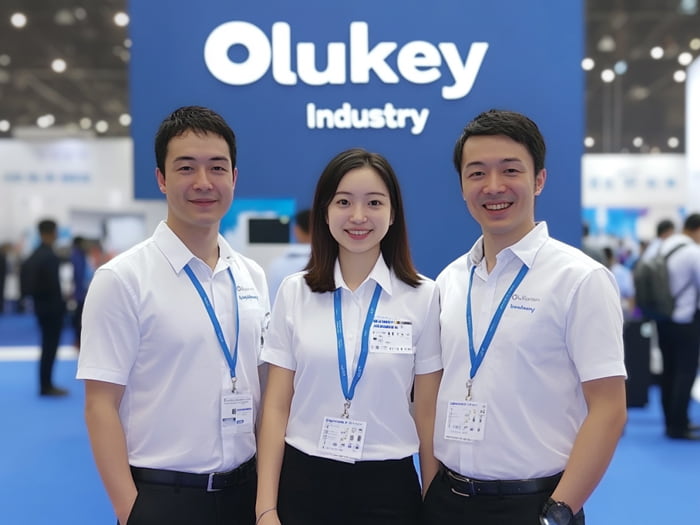
HONGKONG Olukey INDUSTRY CO., LIMITED is a premier global solution provider focusing on the overall integration of high-performance electronic components. We deliver robust solutions built across three key product segments: WINSOK MOSFETs, Cmsemicon MCUs, and customized PCBA circuit board solutions.
Our products serve critical roles in demanding industries worldwide, including automotive electronics, military systems, smart industrial automation, new energy installations, smart healthcare devices, 5G communications networks, IoT infrastructure, smart home devices, and consumer electronics.
By leveraging our strong relationships as an authorized global agent for major original semiconductor manufacturers, Olukey Industry supports the Asia-Pacific and global markets. We supply advanced components alongside engineering design services, helping manufacturers optimize their bills of materials (BOM), secure reliable equivalent alternates, and maintain production continuity.
Our Winsok MOSFET product portfolio spans medium to low voltages: 15V, 20V, 30V, 40V, 60V, 80V, 100V, 120V, 150V, 200V, 250V, 300V, 400V, 500V, 600V, 650V. Sourced in diverse packaging formats, including DFN3X3-8, DFN5X6-8, TO-252, TO-263, SOP-8, SOT-23, TO-220, the brand features over 600 models and 40 packages. This wide range ensures direct drop-in compatibility with most industry-standard power MOSFET designs.
By prioritizing reliability and professional service, we help manufacturers build high-quality systems. Olukey Industry builds long-term cooperative partnerships with high-tech enterprises and component makers worldwide. Our values—"Pragmatism, Win-win, Service, and Responsibility"—drive our focus on service quality and technical support as we expand semiconductor availability globally.
 Olukey